BY THE OPTIMIST DAILY EDITORIAL TEAM
A bird-shaped kite and a floating scarecrow with spinning eyes reduced seabird deaths in Cornish fishing nets by up to 71 percent in a two-year trial. The devices cost relatively little, don’t require significant changes to how fishers work, and are already on the market.
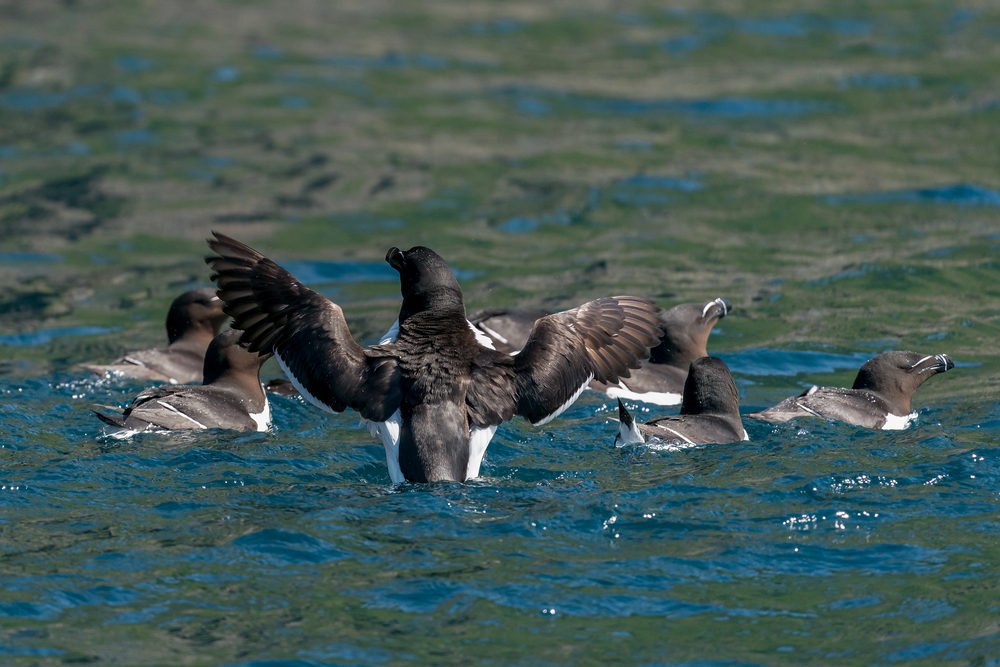
An estimated 95,000 diving birds drown in gillnets off European coasts every year, including razorbills and guillemots, whose North Atlantic populations have been declining. Gillnets hang vertically beneath the water’s surface, nearly invisible to diving birds, which swim straight into them and can’t get back up. It’s been a documented problem for decades, and until now the solutions available to fishers who wanted to do something about it have been thin.
One floats at the net, the other flies like a hawk
The looming-eyes buoy, developed by Fishtek Marine, floats at the surface above the net and has a spinning head with two large eyes. As it rotates in the water, the eyes create a visual deterrent right at the spot where diving birds typically enter. The bird-shaped kite flies from the stern and mimics a bird of prey, triggering the instinct diving birds have to steer clear of aerial predators.
Bycatch program manager Yann Rouxel of the RSPB called the results “a major milestone in the effort to reduce seabird bycatch without impeding gillnet fishers while at sea.” Conservation tools tend to fail in real-world adoption when they’re complicated, expensive, or get in the way of the work. A spinning buoy and a kite don’t fit that description.
Two years, ten Cornish fishers, and footage of every dive
Ten Cornish fishers partnered with Fishtek Marine and the RSPB, fitting cameras to their boats to monitor seabird behavior around the nets over two years. Scientists from the University of Exeter analyzed the footage and catch data. Their results, published in Conservation Letters, showed a 59 percent reduction in bycatch using the looming-eyes buoy and 71 percent using the kite. The study also identified that in Cornwall, most seabird bycatch happens in winter, which gives fishers and conservationists a seasonal window to concentrate device use rather than requiring year-round deployment.
“This study provides some of the strongest evidence to date that simple, practical deterrents can substantially reduce seabird bycatch in gillnet fisheries,” said lead author Tom Horton of the University of Exeter. “By also identifying when and where bycatch risk is highest, we now have a clear opportunity to target mitigation measures where they can deliver the greatest conservation benefit.”
What comes next
Both devices are commercially available, which cuts down the time between having good evidence and being able to act on it. The RSPB has been researching gillnet bycatch for more than a decade; this study gives that work a number to point to. What’s less certain is how quickly the devices reach fishers beyond the ten in the trial, and whether fishery regulators move toward requiring their use in high-risk seasons and areas.
Razorbills and guillemots aren’t in immediate danger of extinction, but their populations have declined, and 95,000 birds a year is a loss that doesn’t have to happen. The fishers who ran the trial are already using both devices. Whether that becomes a wider shift depends largely on what fisheries managers make of a study that gives them a pretty clear answer.
Did this solution stand out? Share it with a friend or support our mission by becoming an Emissary.