BY THE OPTIMIST DAILY EDITORIAL TEAM
September is a transition month for the sky. The Milky Way‘s core is still visible in the Northern Hemisphere, but not for much longer. The nights are getting longer, Venus is at its most radiant all year, the Harvest Moon is coming, and the autumn equinox opens aurora season. There’s a lot going on if you’re willing to step outside.
September 6-7: moon and Mars in the pre-dawn sky
Set an alarm for 3 a.m. and look east. The crescent moon and Mars will appear within about three degrees of each other, roughly three pinky widths held at arm’s length. Give it 90 minutes, and Jupiter rises in a diagonal line behind them, with Saturn to the southwest. All four stay visible until sunrise.
The following morning (September 8), the moon moves on to Jupiter. Look east around 4 a.m. and watch them travel together until daylight.
September 11-12: new moon, your Milky Way window
If you’ve been meaning to find a dark sky, this is the weekend. Around the new moon, there’s virtually no lunar glow washing out the stars. Get somewhere genuinely dark: a national park, a rural road an hour from town, anywhere the sky is properly black. The Milky Way’s core will spread across it in a way that’s hard to describe if you’ve only ever seen it from the suburbs.
This is one of the last months in 2026 when the core is visible from the Northern Hemisphere. After November, it’s gone until spring.
September 14: crescent moon and Venus at sunset
No early alarm needed. Shortly after sunset on September 14, look west. A thin crescent moon will appear within about five degrees of Venus, roughly three fingers wide held at arm’s length. They’ll be visible together for about an hour before dipping below the horizon. Binoculars make it better.
September 18: Venus at its brightest
Venus hits peak brightness for its entire 2026 evening apparition on September 18, reaching a magnitude of -4.8. The full moon, for comparison, sits around magnitude -12, so this won’t strain your eyes. That said, Venus is genuinely easy to find, even from a lit-up neighborhood. Look just after sunset near the western horizon. Mercury will be right there too.
September 22: autumn equinox and the start of aurora season
Fall officially begins the evening of September 22. Foliage fans will be watching New England, but the equinox also tends to bring above-average northern lights activity, because of how Earth’s tilt interacts with solar wind at this time of year.
Auroras are notoriously hard to predict, and solar maximum, the 11-year peak in solar activity, may be winding down. September still opens the season, and this year could deliver some real shows, especially at higher latitudes.
September 25: Mars joins Castor and Pollux
On the morning of September 25, Mars will align nearly perfectly with the Gemini twins, Castor and Pollux, in the eastern sky: Castor at the top, Pollux in the middle, orange-tinged Mars below. Bright Jupiter will also be near the horizon.
September 26: the Harvest Moon, with Saturn
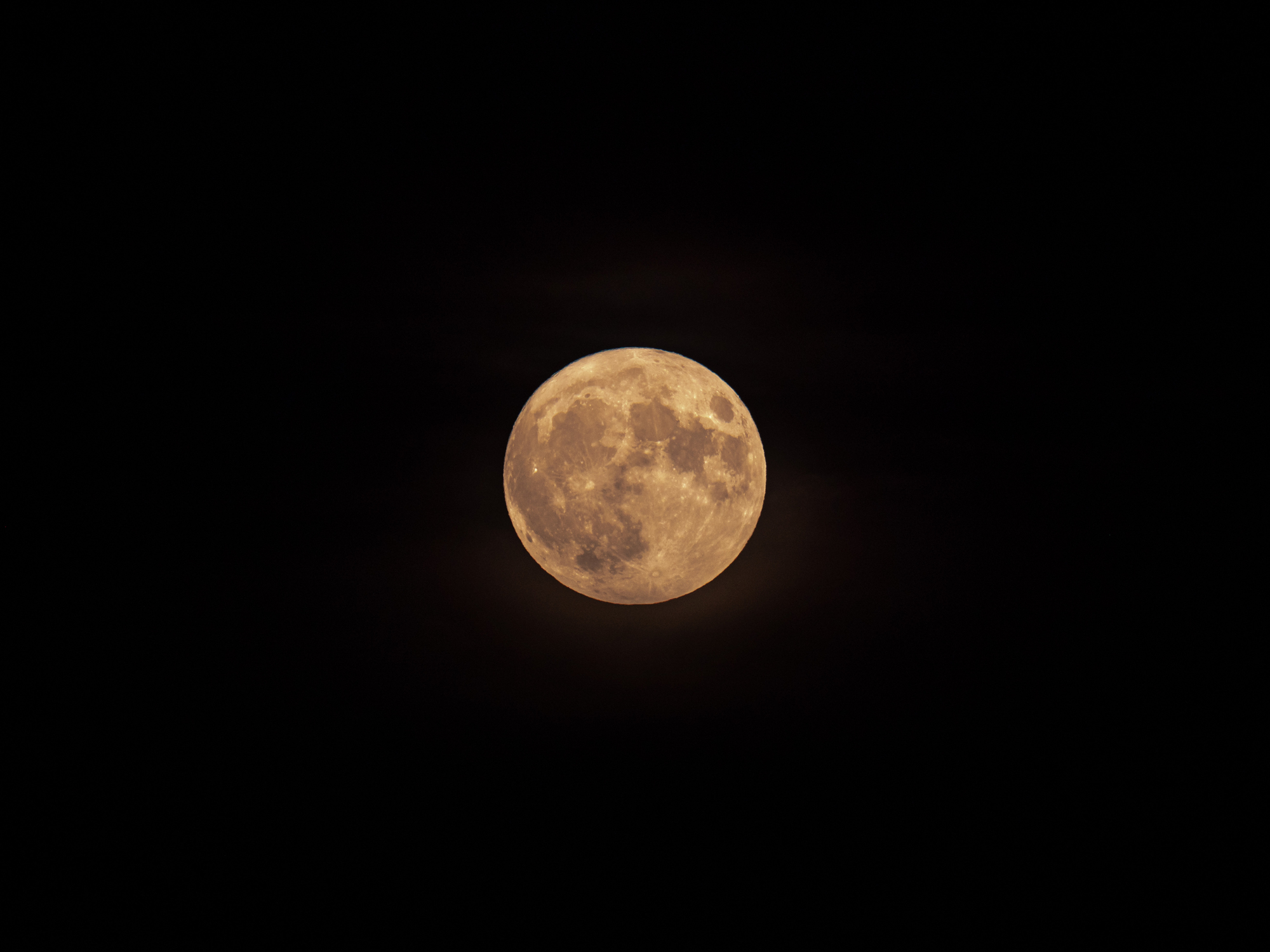
The full moon of September, the Harvest Moon, rises close to sunset and reaches peak illumination just before 1 p.m. ET on September 26. The name goes back to when farmers relied on that early moonrise for light during harvest season. Watch it rise around sunset or set around sunrise: that’s when the moon illusion makes it look largest and deepest orange near the horizon.
Saturn follows within about six degrees all night. If you’re using a telescope, you may also spot Neptune.
All month: Andromeda Galaxy
September is one of the better months for the Andromeda Galaxy, the closest major galaxy to our own. From a dark location, it’s visible to the naked eye as a faint smudge. Binoculars or a small telescope bring out more detail.
Did this solution stand out? Share it with a friend or support our mission by becoming an Emissary.