BY THE OPTIMIST DAILY EDITORIAL TEAM
Think about the last time you went for a walk in the woods. Were you listening to a podcast? Checking your step count? Moving fast enough to feel productive, already running through everything you needed to do when you got home? If any of that sounds familiar, you were probably doing what most of us do: bringing your regular life into the forest with you, and wondering later why you didn’t come back feeling as restored as you’d hoped.
Forest bathing, or Shinrin-yoku as it’s known in Japan, asks something different. Less distance, less agenda. The point is to slow down far enough that your nervous system stops bracing for what comes next, and the forest, which has been here considerably longer than your schedule, gets a chance to do something to you. For a lot of people, that turns out to be exactly what they needed.
Inside Wisconsin’s first certified forest bathing trail
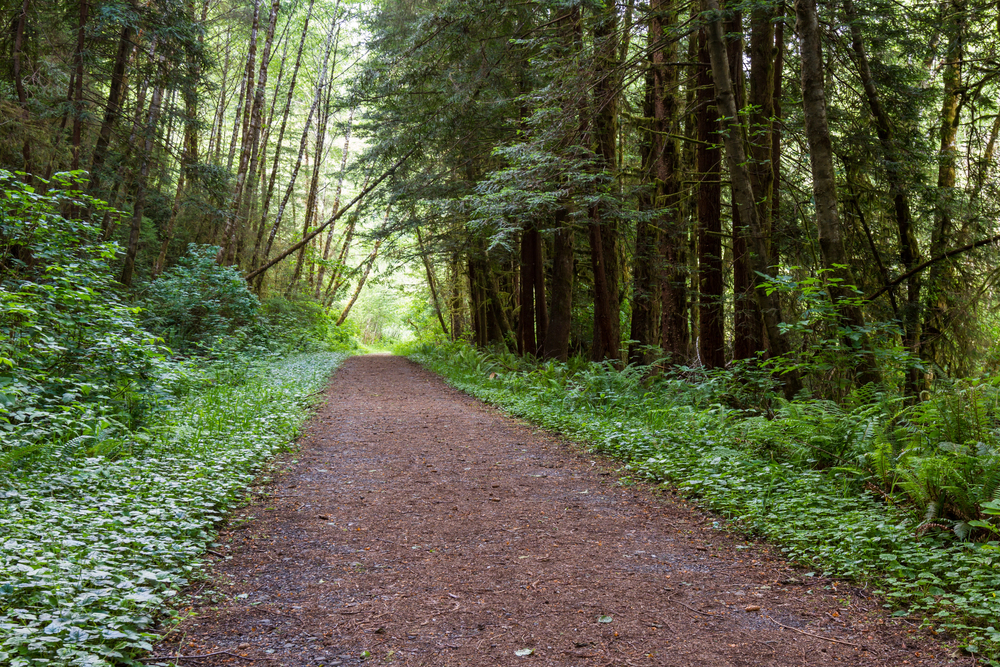
Eagle River, Wisconsin, now has the state’s first forest bathing trail certified by the Association of Nature and Forest Therapy Guides and Programs, one of roughly 50 certified trails worldwide. The Tara Lila Forest Bathing Trail is a one-mile gravel path about a ten-minute drive from downtown Eagle River, on the Trees for Tomorrow campus in a stand of towering aspens, available for guided sessions and solo walks.
The practice was developed by Tomohide Akiyama, then director of Japan’s Ministry of Agriculture, Forestry, and Fisheries, who coined the term Shinrin-yoku in 1982 in response to rising rates of stress-related depression as Japan urbanized rapidly. The idea was to spend time in a forest the way the forest invites you to: not powering through it on a mission but genuinely inhabiting it, moving slowly enough to catch the temperature of the air and the scent of moss and the particular quality of quiet that collects under a canopy. Studies since then have found it measurably reduces blood pressure and cortisol and improves sleep. Certified forest therapy guide Cindy Conlon calls the resulting state “alert relaxation,” being calm and awake at the same time, and notes it’s harder to achieve than most people expect. “Most people are wired and tired,” Conlon has said. “They have to have another hit of caffeine or another energy drink to get through the day.”
On the Tara Lila trail, Conlon gathers the group in a circle for a few minutes of breathing before anyone starts walking. The trail has nine stopping points, each with an invitation card asking visitors to pause and notice: sounds, smells, textures, what’s moving and what’s completely still. People walk in silence between stops, then gather to share what they caught. One person notices the wind in the aspen leaves; someone else focuses on rotting wood crunching underfoot. The cards are also at the trailhead for anyone who wants to go alone.
The people showing up, and why
Heather Fletcher of Eagle River didn’t come to the trail because forest bathing is trending. She came because, four years after a stroke left her relearning how to walk, she’d found that sensory overload from crowds and noise could knock her nervous system sideways in ways that were hard to shake. The woods had become the most reliable way back. “For me, getting out in nature is the only way for me to be able to reset my central nervous system,” Fletcher said. “I get really overwhelmed by crowds, lights, sounds, but if I step outside and go into nature, I can bring myself back into balance.”
Russ Stauber of Marshfield retired in May after a career on factory floors and in highway traffic. He came looking for the opposite of all that. “When you’re at the factory, it’s really loud and noisy, and when you’re on the road you have traffic to deal with, and here it’s just the opposite: so quiet,” Stauber said. “Make of it what you will, and enjoy as much as you can using your senses.”
Beth Soltow of Arbor Vitae described a life that rarely leaves room for stillness: family, career, the constant background hum of feeling like rest is something you haven’t quite earned. The experience caught her off guard emotionally. “We never take time for ourselves because that would be selfish,” Soltow said. “Today was really an eye-opener that it’s OK to even take 30 minutes and have some downtime. Being out in nature, it feels grounding and healthy and just a way to de-stress.”
How to try forest bathing on your next walk
Fortunately, you don’t need a certified trail. Leave the headphones at home and give yourself at least 20 minutes somewhere with trees and no particular destination. Let your gaze soften rather than fix on a point ahead. Notice what the air smells like, whether the sound changes as you go deeper. When something catches your attention, stop and stay with it for a moment rather than moving on.
The hardest part is showing up without an agenda. Shelly Rudnick-Peterson of Phelps said the trail made her realize she hadn’t been doing that on her regular hikes, even though she thought she had been. “I go out on hikes all the time, and it’s always about the hike and how many steps,” she said. “I think I’m doing that when I’m walking, but I’m not.”
Conlon describes the shift when it lands: “It’s just like they’re holding you. They’re holding this space for you to come back to your own self.” The Tara Lila trail is open year-round, with guided sessions through Trees for Tomorrow and self-guided cards at the trailhead. You can also find some trees near home and start there.
Did this solution stand out? Share it with a friend or support our mission by becoming an Emissary.