BY THE OPTIMIST DAILY EDITORIAL TEAM
Anyone who has ever gone hard at the gym on a Monday and then struggled to get off the couch on Wednesday knows exactly what delayed-onset muscle soreness (DOMS) is. You do not need a clinical definition. DOMS is the stiffness, the tenderness, and the specific regret of having committed to that extra set.
Here is the reassuring part: it means the workout did what it was supposed to do. Intense exercise creates micro-tears in muscle fibers, and what you are feeling afterward is your body repairing them, rebuilding the tissue a little stronger each time. The soreness is renovation noise.
What few people realize is how much that repair process depends on what you eat, and how soon after training you eat it. Ibuprofen and ice packs have their place, but some of the most effective recovery tools are sitting in your fridge right now.
Why food is part of the process
When you eat after a workout, “it tells your body to start the restoration process,” says Amy Stephens, MS, RDN, CSSD, a sports nutrition consultant for NYU Athletics. That process runs on two things above most others: protein and carbohydrates.
Protein gets all the credit, and it earns it. It supplies the amino acids muscles need to mend those micro-tears, and around 20 to 30 grams post-workout is what Stephens recommends.
Carbohydrates are the one that tends to get quietly dropped from the plan. “Carbs are something that get overlooked a lot, but they’re really a recovery spark,” says Tyler McDonald, a certified personal trainer and senior brand marketing manager for the National Academy of Sports Medicine. Here is the actual mechanism: carbs raise blood glucose, which triggers an insulin response, and insulin is what moves circulating protein into muscle cells, where the repair work happens. Skip the carbs, and “you don’t necessarily have the right nutrient mix,” McDonald says. The amino acids are there, they just do not get where they need to go as fast. Most sports nutrition guidelines suggest a three-to-one ratio of carbs to protein: roughly 60 grams of carbs per 20 grams of protein.
What to eat, and when
The 30-to-60-minute window after exercise matters more than most people know. Eating within it will “shift your body into recovery mode a lot faster,” Stephens says. Waiting longer delays the whole process, and the longer and harder the workout, the more that timing gap costs you. “The more intense your workout, or the longer you work out, the bigger the priority,” she says.
None of the best post-workout foods are fancy. Eggs on toast hit the protein and carb targets in one simple meal. Yogurt or cottage cheese with fruit does the same, and dairy has a bonus: it contains leucine, an amino acid that “activates recovery a lot faster and builds muscle at a much higher rate,” Stephens says. The fruit adds carbohydrates and antioxidants that help repair damaged tissue. If you need something you can eat in the car, salted almonds and a banana cover protein, healthy fats, carbs, potassium, and sodium with zero prep time.
Dealing with the inflammation
Soreness is not just about muscle damage. It involves inflammation, and a few foods address that directly.
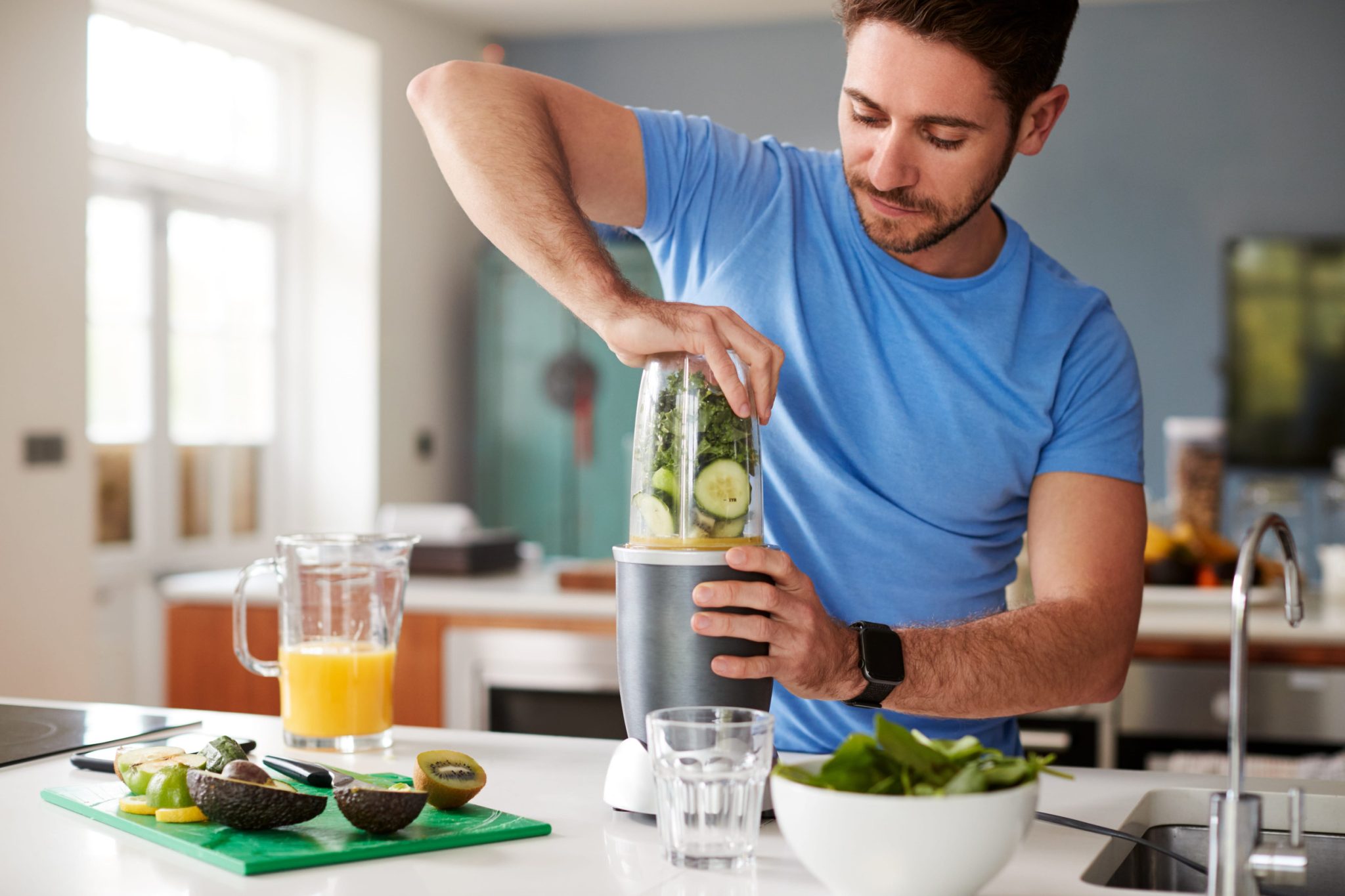
Salmon is one of the better ones. Its concentration of omega-3 fatty acids makes it “really good for inflammation,” McDonald says. If fish right after the gym does not appeal, walnuts, chia seeds, and hemp seeds cover the omega-3 side and are “really easy to toss into a smoothie,” he adds. Turmeric is useful here too, for a compound called curcumin with well-documented anti-inflammatory properties. A spoonful into a shake and you have it covered.
Pineapple and kiwi are worth keeping around as well. Both contain enzymes that help with protein digestion, and bromelain in pineapple has been studied for its ability to reduce the production of inflammatory compounds.
The thing most people completely skip: connective tissue
Tendons and joints do a lot of work during exercise, and almost nobody thinks about feeding them. “It’s not just your muscles that are being worked out, it’s also your tendons and your joints,” McDonald says. They “kind of hold all the bones and muscles in place,” so neglecting them tends to catch up with you.
Vitamin C drives collagen production, which is what keeps connective tissue healthy. Bell peppers are one of the richest sources available. A single serving delivers more than 200 percent of the daily recommended value, more than you would get from an orange. Red peppers have significantly more than green ones. Slice some up with hummus after a workout, and you have covered the vitamin C, the carbs, and the snack craving all at once.
Recovery as a daily practice, not a single meal
McDonald’s broader approach is worth knowing about. Rather than focusing everything on the post-workout meal, he recommends spreading protein intake throughout the day: around 0.4 to 0.5 grams per kilogram of body weight every three to four hours. “Thinking about your recovery as an entire arc through the day, not just this one point in time, makes it a lot more approachable,” he says.
Stephens agrees on the principle that guides all of it: keep it simple. “Keeping it simple is actually the best thing to do,” she says. Practical, nutrient-dense food, eaten close to your workout and spread through the rest of your day, is genuinely most of the work.
Did this solution stand out? Share it with a friend or support our mission by becoming an Emissary.