BY THE OPTIMIST DAILY EDITORIAL TEAM
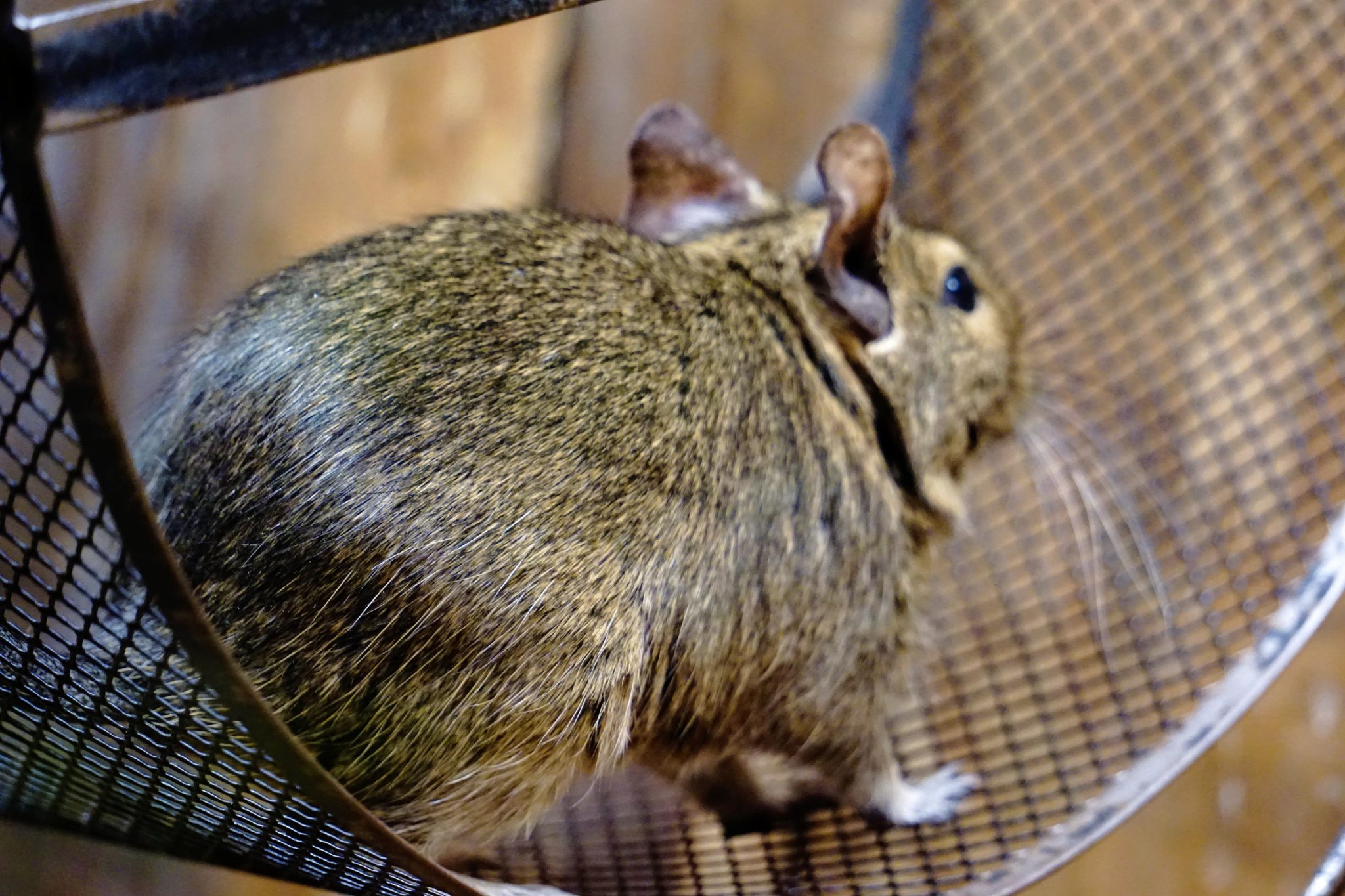
In 2014, researchers placed exercise wheels in two natural outdoor settings and left them there. Wild mice found the wheels and ran on them, sometimes for up to 18 minutes at a stretch, with no training and no food reward. The running continued long after all the bait was removed.
For decades, scientists had assumed wheel running was a neurotic artifact of captivity.
Rodents are built to cover ground
Researcher Johanna Meijer and her colleagues monitored activity at both locations, a green urban area and a remote dune site inaccessible to the public, for more than three years. The wheels drew more than just mice. Shrews, frogs, and slugs also climbed on (a small number of snails were excluded from the data due to erratic movement patterns). Mice still dominated, accounting for 88 percent of all recorded wheel-running activity.
Dr. Theodore Garland Jr., a professor of biology at UC Riverside who has studied wheel-running behavior for more than 30 years, points to physiology as part of the explanation. Rodents have the aerobic capacity, metabolic rate, and home-range size to keep going in ways most other animals simply can’t.
“A toad isn’t going to be running 10 kilometers in a day,” Garland says (roughly six miles). “Whereas a chipmunk could be.” But that explains the capacity. Not the drive.
Dopamine is the likely driver
Why would any wild animal choose repetitive wheel running? Wild ones have plenty else to do.
“There’s still a lot of controversy about what, exactly, wheel running means to an organism,” Garland says. “What is it? What is the organism trying to do?”
The leading hypothesis involves the brain’s reward system. “Dopamine is viewed as the final common denominator,” Garland says. Much like finishing a workout, rodents appear to get a neurochemical payoff from running. In Garland’s lab, mice placed in oversized wheels have been seen slowing mid-run, riding the wheel through a full 360-degree rotation, then carrying on. No obvious purpose. It looks like acrobatics for the fun of it.
“I’m hesitant to use the ‘F-word’ about lower vertebrates,” Garland says referring to the word fun, “but it’s hard to ignore the idea that they’re getting some sort of pleasure or enjoyment out of it.”
This might be the same thing behind the zoomies in dogs, or a young horse tearing around a pasture for no apparent reason. Garland calls it “nip-norting”: burning energy in unprompted bursts, seemingly just because it feels good.
Early access may shape lifelong behavior
Garland’s research also points to a developmental window that matters. Mice given access to wheels right after weaning, at just three weeks old, ran significantly more as adults than those introduced to the equipment later.
“It’s got to be something up here,” Garland says, pointing to his head. “Their reward system has been permanently tweaked.”
He thinks the same logic applies to people. Kids who never get regular movement practice may not develop the circuitry that makes exercise feel rewarding.
“If you’re a kid who never gets to play basketball or tennis,” Garland says, “and then you get to college, and your friends are playing pickup games, it’s probably not even on your radar to do that kind of thing.”
Cutting PE from school schedules, he argues, could leave a mark that shows up decades later. The wheel-running research points to something beyond rodent biology.
Wild mice sought out the wheels and kept running with no training, no reward, and no one watching. The will was already there. If the same is true for humans, and if the developmental window matters as much as the mouse data suggests, the policy question changes shape. It is not primarily about motivating adults to exercise. It is about whether children are getting the conditions to build the wiring before it is set.
Did this solution stand out? Share it with a friend or support our mission by becoming an Emissary.