Episode Description:
Germany just finished building the world’s tallest wind turbine: 1,197 feet tall, and built without a crane. They had to invent an entirely new construction method, because cranes don’t go that high.
Also this week: the Hungarian law that fell in the most unexpected way, a Spanish explorer crossing Antarctica on kite power alone, and why fall makes your brain reach for the same reruns every year. Ten solutions total.
If you have questions, comments, feedback, suggestions, or just want to say hi, send a message to: podcast@optimistdaily.com.
Want to be part of the Optimism Movement? Become an Emissary.
Subscribe to our FREE Daily/Weekly Newsletter and follow us on Instagram, X, and Blue Sky.
The Optimist Daily is a project of the World Business Academy.
Donate link: https://www.optimistdaily.com/donate-to-support-the-optimist-daily/?lsc=41ef528d
Theme and all original music by Marvin Lanes
Transcript:
Intro
Arielle:
Hello everyone, I’m Arielle.
Karissa:
And I’m Karissa.
Arielle:
And welcome back to The Optimist Daily’s weekly roundup. What’s new in your world, Karissa?
Karissa:
Well, I’m excited that this week has graced us with a little bit of rain and some cloudy weather, and it’s just really starting to make me feel pretty cozy and nostalgic, honestly. Which kind of has to do with one of our solutions later. But, uh, yeah, it’s been, it’s been good over here. What about you, Arielle?
Arielle:
Um, I shaved my head.
Karissa:
Well, that’s pretty big.
Arielle:
So that’s been pretty new. Yeah. I mean, obviously this is a podcast, so people don’t know what I look like regularly, but, uh, I did have hair, and now I don’t, and that’s been very liberating.
Mm. But yeah, it is getting colder, so maybe not the most opportune time- I was gonna say … to have an exposed head. But, um, here we are. It’s okay. Uh, just need to get myself, like, a nice little toque, or I guess… Yeah, toque is such a Canadian word, but it’s basically just, like, a beanie. So yeah, I’ll be in the market for some cozy little beanies.
But yeah, other than that, nothing really crazy to report.
Karissa:
Well, that’s a really big change and a very exciting one. Hmm. Um- And it kind of goes with, like, the changing of the seasons as well, so that’s, uh- Yeah.
I love it.
Arielle:
Yeah. The, the, the trees are shedding their leaves, and so am I, in a way.
Karissa:
Yes. You are also shedding the season away and starting anew.
I love it.
Arielle:
Yeah. And as you said, Karissa, some of our solutions have to do with, uh, changing seasons and nostalgia and all of that.
Newsletter & Socials
Arielle:
But before we get into the solutions, we would love to remind everyone that they can sign up for our free daily or weekly newsletter. You can find the link to sign up for that in the show notes, and that way you’ll get all of this positive news straight to your inbox.
Karissa:
You can also get all of this positive news on our social media feeds. You can follow us at @optimistdaily on basically everything, except on X, where we are @OdeToOptimism.
Arielle:
We love it when you guys engage with us, like our stories or posts, share with friends and family, or just on your own personal stories.
All of that is really, really appreciated. Your comments, questions, feedback is very welcome. Or you can reach Karissa and I directly at podcast@optimistdaily.com, so feel free to shoot us an email.
Karissa:
Sharing these solutions in any way possible really helps us out with our mission, and it’s a free way to help The Optimist Daily.
But if you’d like to financially support The Optimist Daily, then you can become an Emissary. The link to do that is in the show notes. And Emissaries also get a really cool podcast shout-out to someone or something that makes you optimistic if you sign up. That email with the information on how to do that should automatically go to you, and we send out periodic reminders as well to- Submit your shout-outs.
Emissary Shout-out & Local Changemakers
Arielle:
Yeah, we haven’t really mentioned the Emissary Shout-out recently, because we’ve been focusing on our Local Changemakers series. On that note, we would love to thank everyone who participated and nominated, uh, young local changemakers. This year, we were focusing on changemakers who are 30 years old and under.
And it’s been really fun to read all of the submissions. And it has been a little bit difficult to choose our finalists. But we have them, and we are excited to share their stories with you in the coming weeks. Yeah, we’re gonna be starting to publish the Local Changemakers series next week on Wednesday.
And we will be featuring a local changemaker every Wednesday into the run-up to Thanksgiving.
Karissa:
Yeah, I’m so excited to share these stories. And thank you once again to everyone who nominated a young changemaker.
Arielle:
Mm-hmm. We did get some comments that people were wondering why we were limiting the age. Um, and honestly, in the last two years that we’ve done the Local Changemakers series, I don’t think anyone who was nominated was under the age of 30.
Most of the submissions were for people who had established charities or who were just further along, you know, in their lives and professional, uh, experiences. So, that’s why we decided to focus on the younger generation this year. If you wanted to nominate someone who was out of this age range, then there’s always next year for that.
Karissa:
And we always have our emails open for any suggestions on people to feature on The Optimist Daily. And we sincerely appreciate all of you sharing all the optimism in your own lives with us year-round.
Arielle:
But speaking of sharing optimism, should I dive into this week’s solutions?
Karissa:
Yeah, let’s get into all the positive news from this week.
Hungary repeals anti-LGBTQ law
Arielle:
The first solution is titled “Hungary repeals anti-LGBTQ law, unlocking billions in EU funds”. Hungary just repealed the law that banned any mention of homosexuality or transgender identities in schools and media, a law Orbán’s government had defended for five years as, quote unquote, “child protection.” The EU had been withholding four point two billion euros over it.
And the thing that finally made the law politically toxic for the government wasn’t a rights campaign. It was actually a child abuse scandal. So the political unraveling started when Orbán’s government pardoned someone who had covered up abuse at a children’s home, which turned their own child protection law into a liability rather than an asset.
The repeal went further than reversing the 2021 law. It also cleared Hungary’s path to rejoin Erasmus+ and Horizon Europe. Those are major EU research programs that had been suspended along with the funding. The civil rights organization that fought this for five whole years is celebrating, but they’re clear that this isn’t full equality yet.
There’s still no same-sex marriage, no adoption rights, and no legal name change process for transgender individuals. But this is a step in the right direction, and we’re here to celebrate every win.
How one small device is solving the apartment solar access problem
Arielle:
The second solution is titled “How one small device is solving the apartment solar access problem”. Most people who live in apartments, like me, have been completely locked out of the rooftop solar boom.
You can’t just install panels on a building you share with, like, 40 other households. An Australian company built a device that essentially solves that, and it just won the top design award in Australia. We actually talked about Australia’s renewable energy boom last week as well.
Karissa:
Yeah. Yeah, another, um, win for them is how much renewable energy they were generating
on one day, and a lot of that coming from individual solar rooftops.
Arielle:
SolShare acts as a traffic controller for solar power, automatically reading each apartment’s real-time energy use and routing power from a single rooftop system to whomever needs it. No separate inverters, no complicated wiring per unit, or any of that.
Millions of people in Australia live in apartments and have basically no access to rooftop solar benefits until now. There’s been, like, a lot of talk on how to get apartment dwellers involved in solar energy generation. I know that in Spain and I think in Germany, they have these, like, balcony solar panels that you can use.
Um, but this one seems even more efficient.
Karissa:
Yeah. Um, balcony solar is a good approach to this too, but not a comprehensive solution. In California, I know that a bill that allows plug-in balcony solar just got passed, so that’s good because, I mean, there’s a lot of apartments here in this really big state as well.
So that will help. But, um, this design could help make everything more efficient.
The surprising history of pumpkins
Arielle:
The next solution is titled “The surprising history of pumpkins: from ancient staple to autumn icon”. So here’s a, a nice, uh, seasonal one for everyone.
Karissa:
Mm-hmm.
Arielle:
You know pumpkin as the flavor of fall, lattes, and pies, and doorstep decorations, but pumpkin isn’t actually a botanical category.
It’s more of a cultural idea that’s been assigned to things for centuries, and for a while in the 1600s, it was a straight-up insult. The whole history- … is weirder and funnier than you’d expect. So the word pumpkin started with the Greeks, and then traveled through French, and landed in English as pompion in the 1500s.
It first appeared in print in 1647 as a reference to how poorly early colonists were eating. Not exactly a glamorous origin. By the late 1600s, pumpkin had become an insult. Depending on who was on the receiving end, it meant either conceited and full of hot air or empty-headed. Politicians were getting called pumpkins for hundreds of years, which is funny ’cause I can think of a politician that I could call pumpkin and a lot more.
Karissa:
I could think of many.
Arielle:
Um, the reason pumpkins became a fall icon isn’t really about taste. It’s about Americans leaving rural life and then romanticizing what they left. The pumpkin became a placeholder for a simpler agrarian past that was already being lost. So I know I’ve jumped around a lot in describing this article, but you’re just gonna have to read it to, like, really get the flow of the history of the pumpkin.
But-
Karissa:
Hmm …
Arielle:
you know, pumpkin spice is kind of like a mood for autumn. Um- Yeah … do you have any strong feelings about pumpkins?
Karissa:
Um, I am just, like, a neutralist when it comes to pumpkin spice, pumpkin-flavored stuff. Like, I think it’s good, but I don’t really, like… I’m not a huge, uh, fan and craving it all year long.
When it’s here, it’s here, and I think it’s great, and I’ll grab it sometimes and maybe make something pumpkin flavored. But yeah, I’m just kind of a neutralist. What about you?
Arielle:
Um, I… Well, now I’m in the Netherlands, and they don’t really have this, like, big pumpkin patch culture in fall. Like, you know when, when people go pick out their pumpkins, and they bring their, like, little
babies, and they have… They’re in the field, and da, da, da. I kind of miss that, so I feel like I’m- Hmm … kind of romanticizing the whole pumpkin thing- … uh, just because it’s something that I feel like I’ve lost coming to Europe. But I’m not a huge fan of pumpkin spice, if I’m being honest. I like pumpkin pie.
Karissa:
Yes, delicious.
Arielle:
Yeah.
Karissa:
I love the point you made about, um, you know, the pumpkin patches, being able to go to small family farms. Because those local farms, they get a real economic boost from this time of year with the pumpkin season tourism. So whether it’s just taking the family to go get your seasonal photos or going to take advantage of the cool stuff that pumpkin patches have to offer, whether it’s corn mazes or pumpkin carving.
I mean, I live in an agricultural area, so I’m familiar with the pumpkin patch culture. It makes me pretty nostalgic ’cause I definitely grew up doing that. And like you said, Arielle, you have to check out the article for more.
A Dutch startup is making concrete that grows its own moss
Arielle:
The next article is titled “A Dutch startup is making concrete that grows its own moss”.
A startup in the Netherlands has developed a concrete coating that grows its own moss. No soil or irrigation. There’s no structural modifications. You just apply it to an existing wall, and the moss colonizes it on its own. They’ve already put it on warehouses, noise barriers, social housing, and bridge piers in Amsterdam, and one of those applications is specifically to deter graffiti.
And I actually think I’ve passed one of these, like, in my neighborhood, um, and I just didn’t realize that that’s what it was until I read this article. Yeah. So how it works is that the moss attaches through tiny thread-like structures that grip the surface without penetrating it. So you can apply this to existing facades without any structural work.
It’s a coating, not a construction project. In Amsterdam, they’re testing it out on bridge piers specifically as a graffiti deterrent, which is not a use case I saw coming. Research shows wet moss cools through evaporation the same way trees do in cities, but dry moss in direct sunlight overheats, so placement and climate really matter for how well it works.
Urban greening is a major climate adaptation strategy right now, and the main barriers have always been cost and maintenance, so this solution addresses both at once.
Karissa:
I love that, you know, it doesn’t require, like, new construction. It can just be applied to already existing structures in cities where it gets a lot of moisture, like Amsterdam.
I’m sure that this can be a really great addition.
World’s tallest wind turbine reaches 1,197 feet in Germany
Arielle:
The last solution that I’m going to share with everyone before I hand the reins over to Karissa is “World’s tallest wind turbine reaches 1,197 feet in Germany”. Germany just completed the world’s tallest wind turbine, 365 meters tall, taller than Berlin’s TV tower, which is also very tall.
They couldn’t use a crane to build it because cranes don’t go that high, so they invented a new way to do it. But honestly, the most significant part isn’t the height, it’s the proposal to add thousands of these above existing wind farms without using a single square foot of new land. As I mentioned, traditional cranes couldn’t reach, so they built like a telescoping inner tower that raises itself through a surrounding lattice structure.
The construction method is as novel as the turbine itself. Germany has around 30,000 existing wind turbines, and the proposal is to place taller ones above or alongside them rather than finding new land, which sidesteps one of the biggest political fights in wind energy, which is people don’t wanna give up the land.
GICON, the engineering firm that built this turbine, says, uh, this design could generate roughly twice the electricity of conventional turbines with comparable rotors because winds at 300 meters are faster and more consistent. But commissioning isn’t until November, so the real world numbers aren’t in just yet.
As I said, land use is one of the biggest political obstacles to wind expansion. There’s, like, a lot of not in my backyard fights that have stalled projects for years. But stacking vertically rather than spreading horizontally reframes the whole conversation
Karissa:
All right. Well, I’ll take it from here, Arielle.
Fall nostalgia: why your nervous system reaches for reruns
Karissa:
Heading back into the whole fall idea, the next article is “Fall nostalgia: why your nervous system reaches for reruns when autumn arrives”. The urge to rewatch your comfort show every October isn’t just a personality quirk. There’s a real psychological reason your nervous system steers you toward reruns when fall arrives.
Something about the season registers as a small form of loss, and your brain responds by reaching for the familiar. I mean, I’ve definitely had this feeling before. And before I go any further, Arielle, is there anything that you rewatch every fall or find yourself, uh, reaching for?
Arielle:
When Harry Met Sally.
Karissa:
Yes.
That one is very, very fall indeed.
Arielle:
Yeah, I don’t know. I just, I love the aesthetic. And yeah, I guess I never really noticed that I always wanna watch that particular movie once, like, the leaves start to change and stuff.
Karissa:
Yeah. For me, I always go back to Taylor Swift’s Red album in the fall. And it’s very, like, a fall-coded album in general, but it came out in the fall when I was, like, in junior high, and it always brings me back to that time of year.
And it sometimes makes me feel a little bit, like, sad too because I start missing that time in my life. In general, your body recognizes fall through a whole bunch of sensory clues. There’s wood smoke, October light, the sound of a school bus, and that’s what takes me back to Red.
Arielle:
Mm-hmm.
Karissa:
But the same memory system that holds pre-verbal experiences from early childhood is also at play here when you experience all these, these autumn, um, these autumn-
Arielle:
Sensations
Karissa:
things. Yeah, sensations is exactly the word. Psychologists say we prefer reruns in the fall because our brains favor predictability when things feel uncertain. And you already know how it ends, so that matters a lot more than you’d think. Nostalgia isn’t just about these warm, fuzzy feelings. It can also hold a lot of grief, and looking backward is a part of how we integrate the past and then move forward.
So there is a psychological reason why we want to indulge in this fall nostalgia.
Is this nut the most underrated sleepy-time snack?
Karissa:
Okay, the next solution is, “Is this nut the most underrated sleepy-time snack? Here’s what the sleep research says”. Apparently pistachios contain their own melatonin. They don’t just offer compounds that help your body make melatonin, they produce it themselves.
A nutritional review found that one small handful covers five different sleep-related nutrients at once, which is a pretty unusual thing to find in any single food. Pistachios have more vitamin B6 than any other tree nut, and B6 is the co-factor your body needs to convert tryptophan into serotonin, into melatonin.
So there’s a whole chain reaction happening from that one handful, and there’s a little bit more of the science behind it in the article. The thing is that there hasn’t been a clinical trial that has actually tested pistachios directly for sleep yet, and the review was partially funded by American Pistachio Growers, so there might be a little bit of a bias here.
But in an era where sleep is kind of one of the biggest wellness obsessions right now, and there’s magnesium supplements, mouth tape, weighted blankets, people are really desperate for anything that helps with sleep.
Arielle:
Yeah, I really like the food as medicine angle. It’s getting way more mainstream, so people aren’t just thinking about sleep hygiene habits.
They’re also starting to ask what they should be eating. And I think food is definitely underrated, especially, um, in North America as-
Karissa:
Mm-hmm …
Arielle:
as an impactful solution to some of your health issues. Um- Yeah … so even though there’s no clinical trial yet, I think it’s, it’s worth more seriously considering food as a way to help you out with whatever health or wellness issues you’re struggling with.
How kites and ancient design are replacing fuel in Antarctic exploration
Karissa:
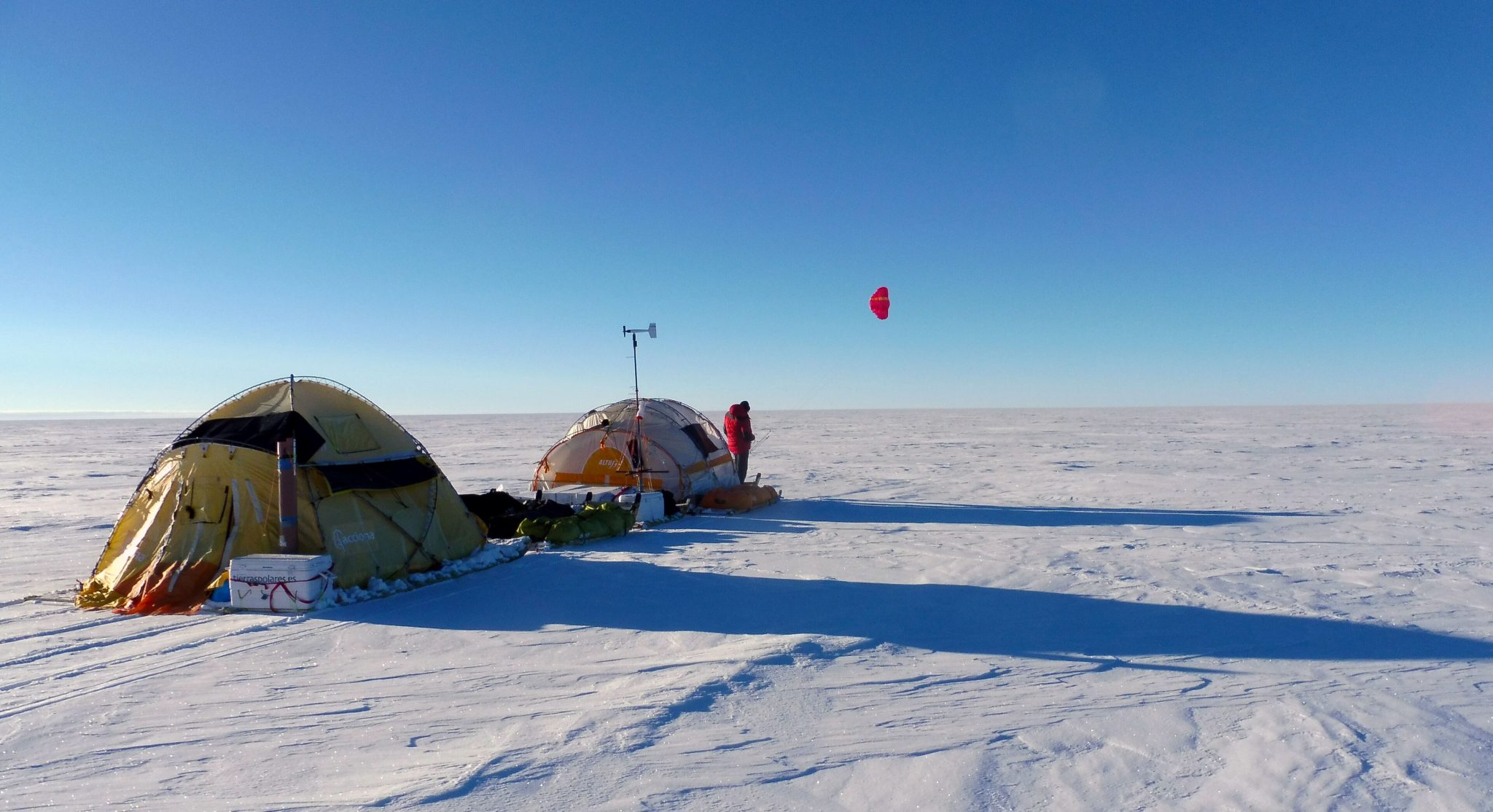
The next solution is kind of a fun one, “How kites and ancient design are replacing fuel in Antarctic exploration”. A Spanish explorer just left for Antarctica on a sled powered entirely by kites. No engine, no fuel. The last time someone made a comparable crossing, they burned through 45,000 gallons of diesel.
But this sled is built on ancient Inuit design principles that this, uh, researcher has been refining for 25 years, and NASA is also along for the ride. So again, this vehicle draws from Inuit sled design and goes back to ancient indigenous knowledge. This technology is something that’s been used for thousands of years.
There’s a number of onboard research projects on this kite-powered sled. One of them is a NASA study asking whether salt rocks on Antarctica’s surface could harbor microbial life. The four crew members themselves on this kite-powered sled are also research subjects. A psychologist is monitoring their isolation, sleep, and social dynamics for 85 days to generate data for future space missions.
There are such harsh conditions out there, so being able to refine and use this kite technology is pretty interesting. And of course, it’s important to use sustainable science in exploration.
New research identifies the exact spot where Alzheimer’s protein tangles lock in
Karissa:
The next solution is “New research identifies the exact spot where Alzheimer’s protein tangles lock in”. We- researchers at Northwestern and UC Santa Barbara, go Gauchos, that’s where I went, have identified the specific point on a tau protein where the misfolding that causes Alzheimer’s begins.
It’s not somewhere vague in the brain, it’s the exact molecular anchor point, down to which amino acid, so really pinpointing here. And blocking that one spot in lab experiments actually stops the spread of Alzheimer’s, so this could be a very important piece of the puzzle. The mechanism that the researchers found is called dock-and-lock.
The misfolded tau docks at one specific spot first, then the rest of the protein snaps into the wrong shape, and blocking just that one anchor point inhibited fiber growth in experiments. This research is part of a broader shift towards molecular level targeting in neurodegenerative disease, identifying the exact mechanism rather than trying to clear a protein broadly.
There’s still a gap between, you know, pinpointing this spot and being able to create a drug that actually does something about it. But of course, the research has to come first, so we’re happy to recognize this progress.
The Giving Grove: how Kansas City’s free community orchards became a national model
Karissa:
Moving on to our final solution of the week, we have “The Giving Grove: how Kansas City’s free community orchards became a national model”.
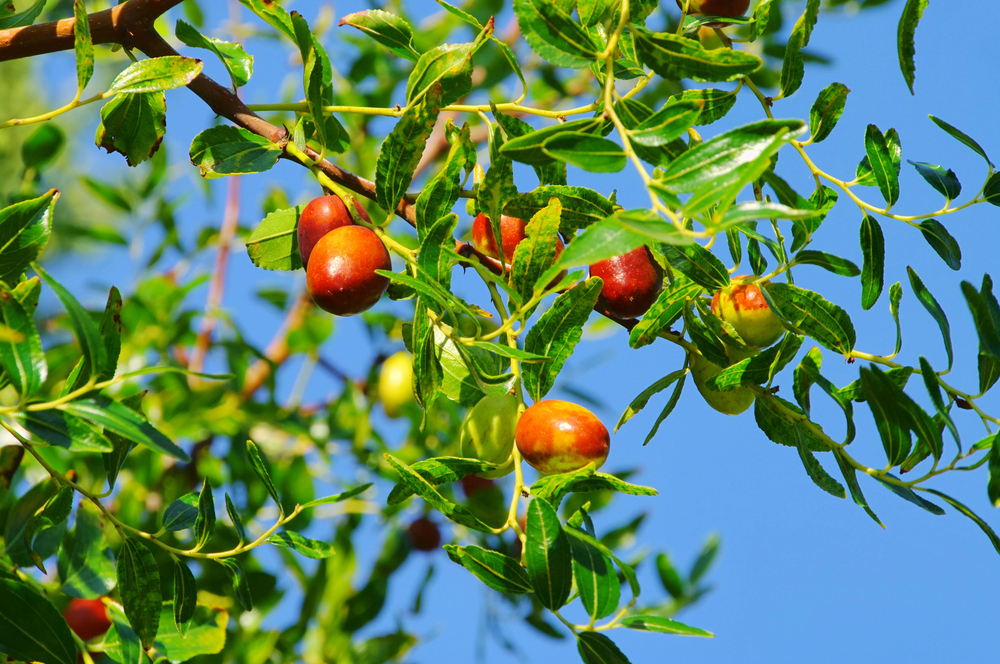
13 years ago, someone planted a small orchard on the corner of a shuttered school in Kansas City, and today that idea has grown into 14,000 trees across 847 orchards in 17 cities, which means that more than a million people live within walking distance of a free fruit tree. Kansas City now has more community orchards than any other city in the country.
It has nearly 250 of them. The reason 80% of these orchards are still productive, which is genuinely high for grassroots urban agriculture, is that the organization didn’t just plant trees and leave them, they built a stewardship network of 1,700 trained orchard caretakers across the country. This kind of reminds me of a solution I- we just shared about, um- Some trees planted in Germany, and they have, like, a whole app in, you know-
Arielle:
Mm, yeah Um- So that citizens could also take care of the trees and give them water when they, when they needed it.
Karissa:
Mm-hmm. Yeah, I love this, uh, citizen agriculture movement. So cool. These orchard caretakers operate on about a million dollars a year and only go where they’re invited. Communities have to request orchards, so the model has held up because they don’t impose the model at all. The idea is spreading across to other cities.
San Francisco, Minneapolis, and New York are now in discussions to join this trend of community orchards. So it’s actively scaling, and it’s a, you know, a very hyper-local solution that individual communities can focus on and implement themselves.
Arielle:
And it really addresses the issue of food access. Um-
Karissa:
Mm-hmm.
Arielle:
Food access equity is a real issue right now. There’s food deserts. There’s rising produce costs. There’s diet-related chronic illnesses, and this kind of a solution that you mentioned, it’s low-tech, it’s hyper-local, um, and it’s pretty permanent. I think this can address a lot of those issues. I know that urban agriculture has been having a cultural moment, but a lot of urban agriculture is focused on, like, boutique rooftop gardens, and-
Karissa:
Yeah
Arielle:
you know, not everyone has access to that. So a community orchard serving everyday neighborhoods is a different category, and I can just imagine, like, rocking up to a tree and picking a fruit off of it- … and eating it. That… It’s also so satisfying.
Karissa:
Okay. Well, that’s all the positive news we had from The Optimist Daily this week.
Positive Quote & Wrap-up
Karissa:
Before we log off for the day, we have a positive quote to share with you.
Arielle:
This one’s from E.B. White, the author of Charlotte’s Web, one of my childhood favorites. Okay, so the quote says, “Hang on to your hat, hang on to your hope, and wind the clock, for tomorrow is another day.” We will be back next week with more solutions, but until then, we hope you enjoy your weekend.
Karissa:
Yeah. Bye, everyone!
Arielle:
Bye!