


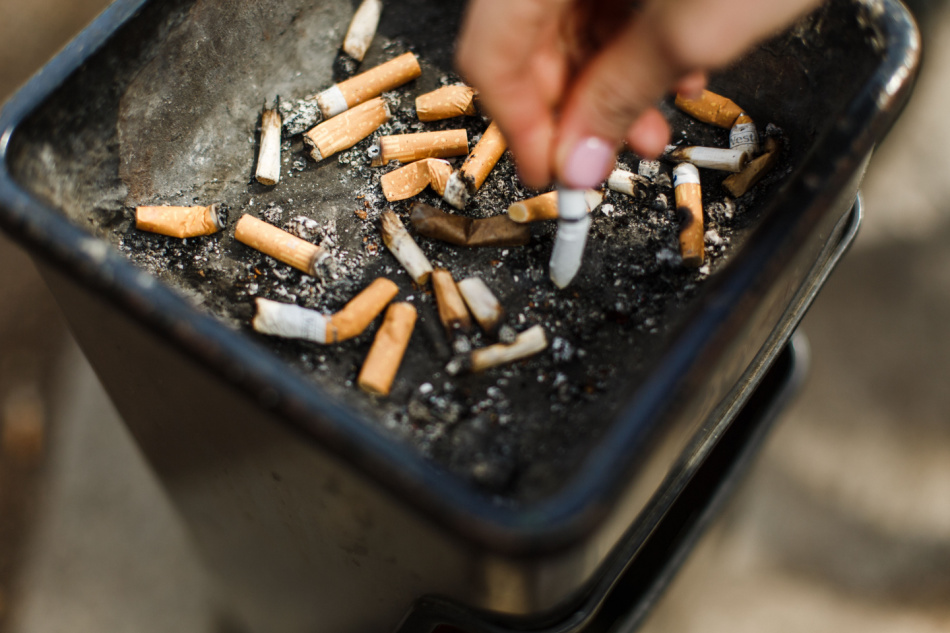
Tobacco businesses will be obliged to pay for the cleanup of millions of cigarette ends discarded by smokers each year under new environmental legislation in Spain.
The decision, which went into effect last week, is part of a package of waste-reduction and recycling efforts. It calls for the elimination of single-use plastic cutlery and plates, cotton buds, expanded polystyrene cups, and plastic straws, as well as restrictions on plastic food packaging.
The regulation is in line with a European Union directive that limits the use of single-use plastics and requires polluters to clean up after themselves.
Cigarette producers will also be responsible for teaching the public about the dangers of discarding their cigarette ends in public places, although it is unclear how the cleanup would be carried out or how much it will cost.
According to one Catalan study, the annual cost ranges between €12 ($12.88) and €21 ($22.55) per resident, for a total of up to €1 billion.
Earlier this year, the Catalan government proposed a program in which cigarette butts could be redeemed for €0.20 each, adding €4 ($4.29) to the current average price of €5 ($5.37) for a pack of 20 cigarettes. The scheme has yet to be implemented.
Tobacco businesses are expected to pass on the cost to consumers, providing yet another incentive to quit smoking. According to government statistics from last year, approximately 22 percent of Spaniards smoke (16.4 percent of women and 23.3 percent of men), compared to an EU average of 18.4 percent.
Despite the significant number of smokers, particularly among young people, the majority opinion favors tighter restrictions on smoking in public areas. According to a poll conducted by the family medicine association, 85 percent of respondents support additional restrictions, with 72 percent favoring a ban on smoking in bar and restaurant terraces.
Cigarette butts are one of the most common types of litter and take around 10 years to degrade, releasing harmful chemicals such as arsenic and lead in the process.
According to the non-profit Ocean Conservancy, cigarette butts are the most prevalent kind of marine pollution, even more so than plastic bags and bottles, with an estimated 5 billion dumped in the ocean.
As of now, around 500 Spanish beaches have been certified smoke-free in the interest of public health and to limit the number of butts that end up in the sea.






