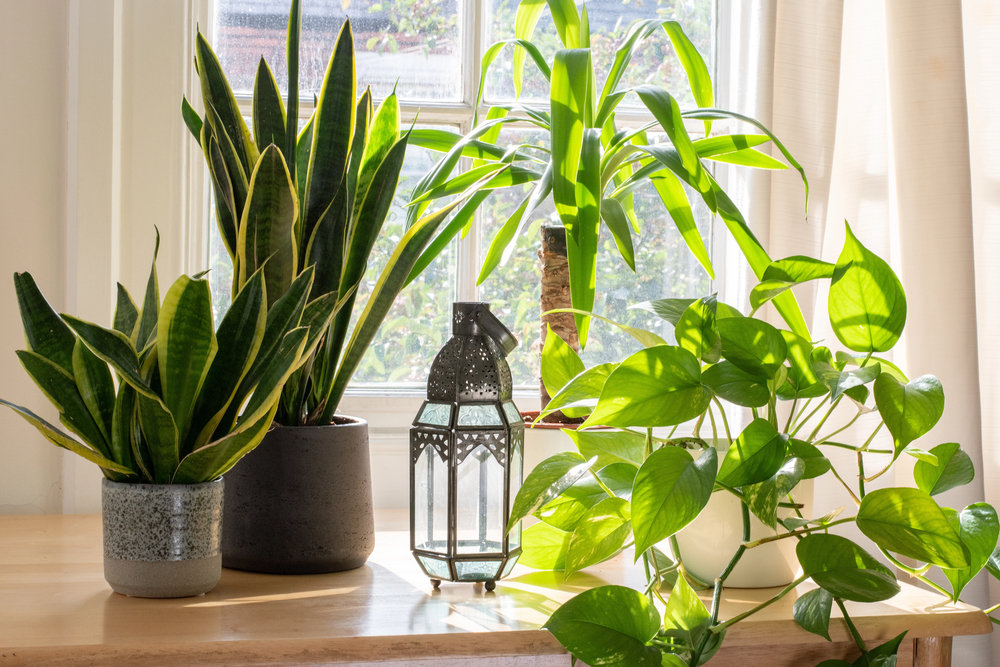
From making your home more aesthetically pleasing to generally improving your wellbeing, the benefits of houseplants have been documented all too well. Here are five of the most important reasons for living together with these green companions:
They give an assist in breathing
While we breathe in oxygen and exhale carbon dioxide, during photosynthesis, plants do the opposite. This symbiotic relationship is what makes protecting our planet’s flora so important.
A good thing to know, though, is that most plants switch things up when photosynthesis stops at night and absorb oxygen and release carbon dioxide. However, a few special plants — like orchids and succulents — flip that script and take in carbon dioxide and release oxygen. So a smart thing to do is to use these plants in bedrooms to keep the oxygen flowing at night.
They help deter illness
After the water circulates through the roots of plants, it then evaporates through their leaves in a process known as transpiration. When it comes to houseplants, this process increases the humidity indoors, which can be a blessing during drier months or if you live in regions with an arid climate.
More humidity indoors is also known to decrease the incidence of dry skin, colds, sore throats, and dry coughs. What’s more, higher humidity has also been linked to decreased survival and transmission of the flu virus.
They clean the air
As documented by a NASA study, plants play a pivotal role in improving indoor air quality: “Both plant leaves and roots are utilized in removing trace levels of toxic vapors from inside tightly sealed buildings. Low levels of chemicals such as carbon monoxide and formaldehyde can be removed from indoor environments by plant leaves alone.”
Some of the best plants to remove indoor pollutants include the Peace lily (Spathiphyllum wallisii), Golden pothos (Scindapsus aureus), English ivy (Hedera helix), Chrysanthemum (Chrysantheium morifolium), Bamboo palm (Chamaedorea sefritzii), Red-edge dracaena (Dracaena marginata); and Spider plant (Chlorophytum comosum).
They boost healing
While bringing flowers or a plant while visiting a hospital patient sounds like a cliché, it’s actually one of the most useful things you can do to help their recovery. In fact, they can be so effective in helping surgery patients recover that one study recommends them as a “noninvasive, inexpensive, and effective complementary medicine for surgical patients.”
They help you work better
As with simply being in nature, being around plants improves concentration, memory, and productivity. And there are a number of studies to back these facts up. Research from the University of Michigan, for example, has found that being “under the influence of plants” can boost memory retention by up to 20 percent.
Meanwhile, research from Norway has found that the presence of plants in the office can significantly enhance worker productivity, their attention span, as well as improve the accuracy and quality of their work.
Additional sources:
NASA – Foliage Plants for Improving Indoor Air Quality
American Science for Horticultural Science – Therapeutic Influences of Plants in Hospital Rooms on Surgical Recovery
ScienceDirect – Foliage Plants for Improving Indoor Air Quality