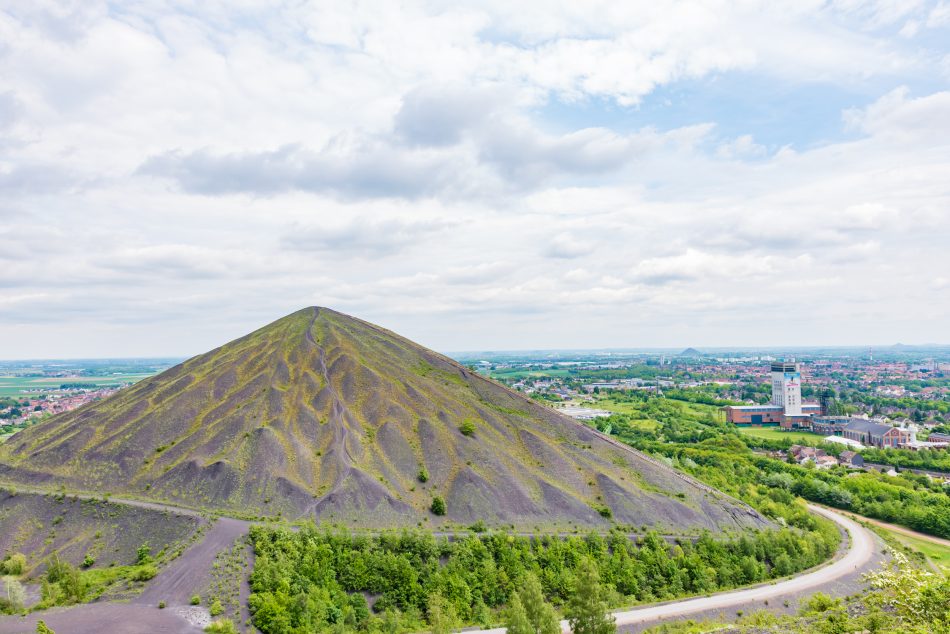
Once upon a time, Nord-Pas-de-Calais supplied half of France’s coal. This region in the north of the country is distinguished by the giant pyramid-like black cones of slag which are a result of three centuries of environmental and economic hardship.
Now, when you get close to the slag cones, or terrils, you see that they are actually green, growing over with vegetation. Indeed, the whole region has gone green. In the last 20 years, Nord-Pas-de-Calais has become a hub for green tourism and a memorial to its difficult, coal-mining past.
“Charbonnay” and yoga
In the early 2000’s, despite a local interest to level the cones, a few visionaries decided to turn the terrils into a memorial and a tourist spot after a few helicopters flew over and dropped seeds on the black mounds. Soon, the seeds started to sprout, and the terrils began to turn green.
“The terrils are pockets of nature in a highly industrialized, urbanized area,” explains Frédéric Rivet, a naturalist-ranger at the Terril des Argales. Because of the soil’s heat, “they foster a biodiversity that wasn’t here before, attracting rare species like the European nightjar, and those usually found in a coastal marine habitat, like the natterjack toad, its mating call so loud you can hear it [about a mile] away.”
After years of development, this terrils are a playground for nature enthusiasts and tourists. The slopes of the terrils offer sky slopes, hiking trails, and biking paths. The towns around them offer boutiques, cafes, meditation centers, and yoga studios. In Loos-en-Gohelle, its terraced vineyards produce a point of pride for the town and its chardonnay grapes: the “Charbonnay” wine. This is a play on words with “Chardonnay” and the French word for coal, charbon.
Honoring the past
While the region’s new businesses and attractions make up its thriving present, the economic and social tribulations of its past are memorialized in Nord-Pas-de-Calais. Coal mining is a dangerous profession that affected the health of the community and of its workers.
“I feel that I’m resurrecting the memory of the miners, particularly my father and grandfather, who died before the age of 60,” says Bernard Lefrançois, a former miner who guides tours at the Base 11/19. “When I speak of the work underground, I always get chills … I cannot help but think of the toil, the sweat, the deaths. There are monuments to the memory of soldiers who died for France all over the country; the slag heaps, for me, are the national monuments to the miners.”
This is a bold, innovative, and prosperous way to guide Nord-Pas-de-Calais into the future while also honoring its past.