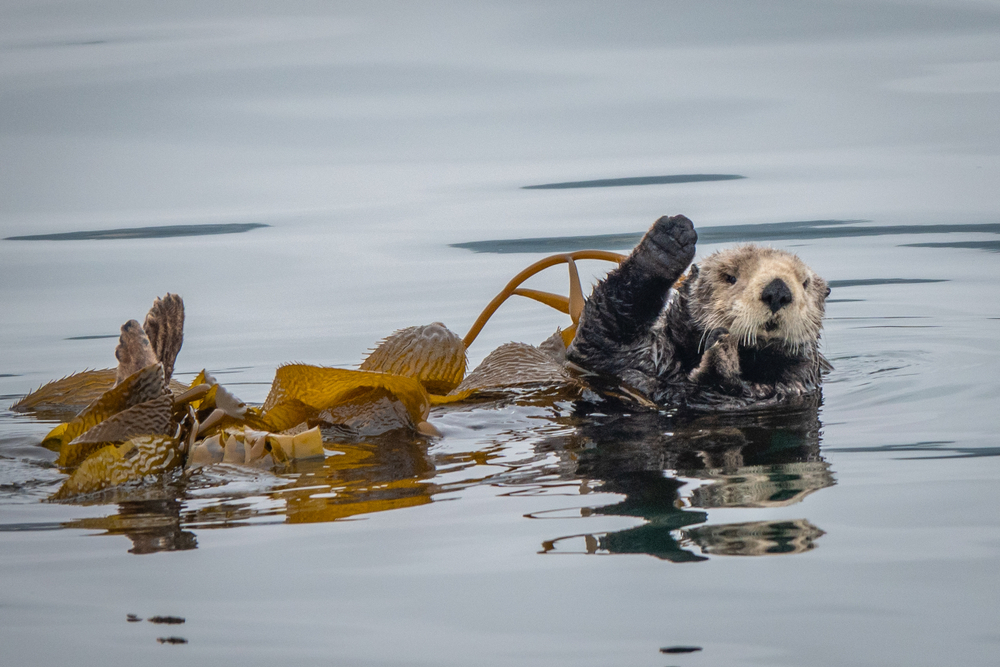
New research from the Monterey Bay Aquarium reveals a striking link between the recovery of Southern sea otters and the condition of kelp forests along the West Coast. According to a study published in the journal PLOS Climate, the recovery of sea otter populations in central California coincided with considerable increases in kelp forests between 1910 and 2016.
Teri Nicholson, the study’s lead author, asserts in a press release, “Our study showed that kelp forests are more extensive and resilient to climate change where sea otters have reoccupied the California coastline during the last century.”
Kelp forest gains and losses across California
While central California saw a 57.6 percent increase in kelp forests or 19.7 square kilometers, the northern and southern regions experienced losses. Northern California lost approximately 8.1 square kilometers, whereas southern California lost 18.3 square kilometers. These losses mirrored locations where sea otters were virtually hunted to extinction in the nineteenth century.
The study findings emphasize the disparity, stating, “Where sea otters are absent, kelp forests have declined dramatically.”
Sea otters: guardians of biodiversity
Kelp forests provide critical habitat and food for marine life, and they play an important role in biodiversity conservation. The study points out the importance of preserving sea otter populations to prevent sea urchin dominance, which can destroy kelp forests and create what scientists refer to as “urchin barrens.”
According to the study’s senior author, Kyle Van Houtan, “Sea otters, of course, are hugely influential for Pacific kelp forests. Historical studies like this are a crucial demonstration of this dynamic over the long term.”
Kelp’s impact on climate change mitigation
Aside from their ecological relevance, kelp forests provide a major contribution to climate change mitigation. Kelp can absorb about 20 times more CO2 per acre than land forests. Their involvement in reducing coastal erosion adds to their environmental value.
The study emphasizes the environmental benefits of kelp forests, saying, “Kelp forests play an important role in mitigating coastal erosion.”
Threats to kelp forests
While pollution, over-harvesting, and climate change all pose dangers to kelp forests, the decline of sea otter numbers emerges as a major concern. The findings show that sea otters operate as guardians, keeping sea urchins from overgrazing kelp and preserving the ecosystem’s delicate balance.
Acknowledging the multifaceted challenges, the study highlights, “Ecosystems are complex, and to give them their best chance at surviving these extreme changes, they need all their component parts.”
The Monterey Bay Aquarium’s research reveals a peaceful link between sea otters and kelp forests. As sea otters thrive, so do kelp forests, resulting in balanced ecosystems. In the face of mounting dangers such as rising ocean temperatures, recognizing and sustaining this delicate interplay is critical to the health of California’s coastal habitats.
Source study: PLOS Climate—Sea otter recovery buffers century-scale declines in California kelp forests