BY THE OPTIMIST DAILY EDITORIAL TEAM
What if scraps from a dinner could become a habitat?
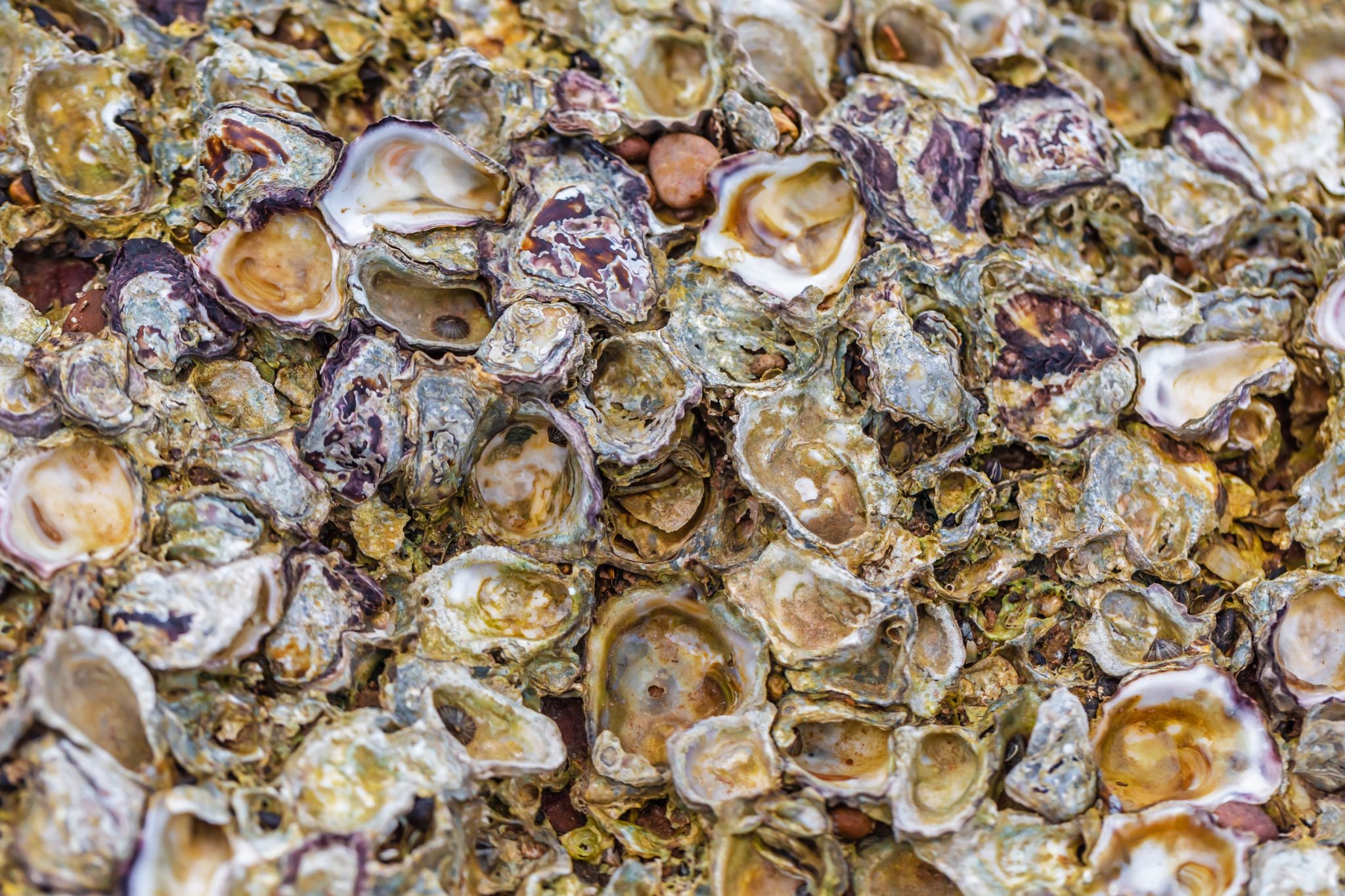
That’s the basic premise of the Shells for Shorelines program in a meaningful sense: the shells of oysters eaten at restaurants in Orange County can become the foundation on which new oysters settle and grow in the ocean.
The program is not just as simple as that sounds, but the logic holds. And that loop, unlikely as it is, is how marine restoration director Kaysha Kenney has collected more than 24,000 pounds of discarded oyster shells, roughly 12 tons from restaurants and seafood markets across Orange County and Long Beach, into what she calls an “oyster field.”
How much coastline we’ve already lost
To understand why anyone is doing this, it helps to understand what was lost, when, and how completely. A global analysis of 144 bays found that oyster reefs were at less than ten percent of their former abundance in 70 percent of the bays studied, and researchers estimated that 85 percent of Earth’s oyster reefs had been lost to overharvesting, habitat destruction, disease, and declining water quality. Ecosystems that once shaped the character of bays and estuaries across California have been gradually erased, without much public attention.
What those reefs provided goes beyond what most people imagine. NOAA Fisheries describes them as functioning habitat for fish, crabs, and smaller forage species. Under the right conditions, a single oyster can filter up to 50 gallons of water per day. Cleaner water supports the growth of underwater grasses, which shelter juvenile crabs, scallops, and fish, and along exposed coastlines, intact reef structures can reduce wave energy and slow erosion in ways that are difficult to replicate with engineered solutions.
Kenney, who is 31, does not pretend to be dispassionate about this. “I think oysters are the coolest,” she told People magazine. Her TikTok videos, which show the bins, the curing field, and the less romantic logistics of restoration work, have generated real public interest, which she seems to find useful rather than distracting, because the problem she is working against is far larger than Orange County.
The unglamorous logistics behind the loop
After restaurants and seafood markets set aside their shells, Kenney’s team coordinates the pickups, hauls the bins, weighs and catalogs the material, and then spreads everything out under the California sun for at least six months before any of it goes back into the ocean. The curing period removes harmful pathogens, a step that tends to surprise people who hear about the program, because the image of a sun-baked shell field doesn’t quite fit the idea of shellfish restoration.
What has emerged around those logistics is something that functions like a supply chain assembled from unlikely participants: restaurant staff setting shells aside instead of binning them, volunteers showing up for pickups, local dock owners contributing to planting projects, and scientists tracking what grows. Orange County Coastkeeper argues that this participation is just as important as the shells themselves, because restoration programs tend to hold up better when the people around them understand what they’re for.
A native species making a slow comeback
The program’s focus is the Olympia oyster, California’s only native oyster species, which Kenney has called “powerhouses for our coast.” In October 2025, Orange County Coastkeeper reported that local dock owners had helped recruit 1,600 native Olympia oysters through a restoration project, a number that will keep growing as the oysters settle onto the reef beds and the water around them gradually clears.
The timeline for any of this to matter ecologically is long, and the improvements in water quality, shoreline resilience, and marine biodiversity that follow are the kind of thing that accumulates in data before it shows up anywhere you can see. That gap between what the program is doing now and when its effects will be felt is, in a way, the central reality of the work: the shells sitting in the sun are a commitment to a coastline that doesn’t exist yet.
Did this solution stand out? Share it with a friend or support our mission by becoming an Emissary.