BY THE OPTIMIST DAILY EDITORIAL TEAM
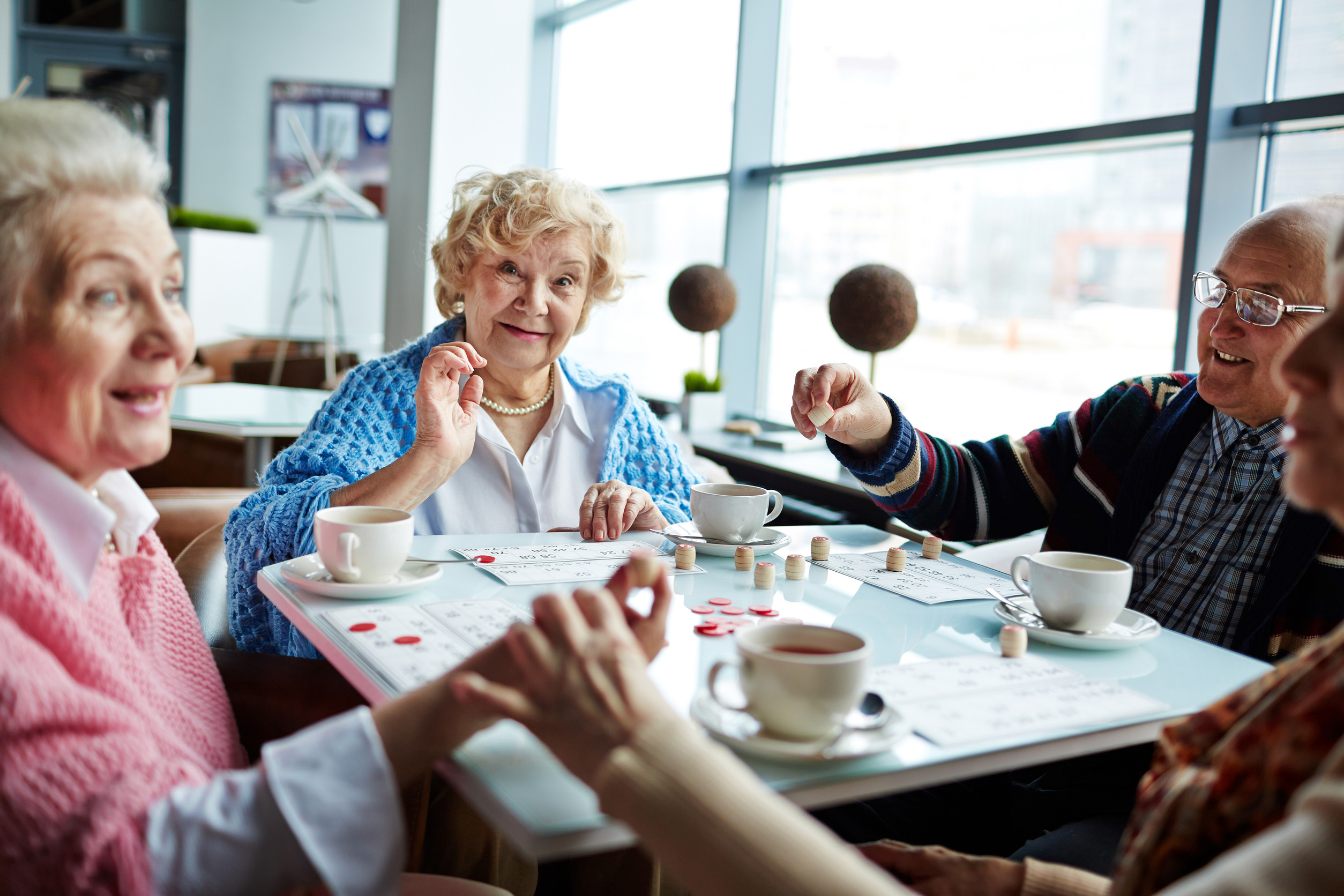
In a cheerful, sea-themed room in Clarks Summit, Pennsylvania, a small group of people gathered under balloon jellyfish and streamers. There were pastries, coffee, trivia games, and coloring pages. But what made the space truly special was the people. Everyone there was either living with memory loss or caring for someone who was.
Rob Kennedy, diagnosed with early onset Alzheimer’s disease in his late 50s, has become a regular. Twice a month, he attends the local memory cafe, a welcoming place where camaraderie and laughter abound.
“We all have a good time going around. You know, we all try to make it fun,” he said with a smile. The trivia questions don’t always get answered, but the joy of trying matters more than the score.
Creating connection beyond clinical care
Memory cafes are social gatherings designed for people with cognitive impairments and their caregivers. They aren’t clinics or therapy centers. Rather, they provide something just as vital: connection. With more than 600 such cafes now operating across the U.S., they’re an increasingly popular and affordable model for community-based dementia support.
For Kennedy, who had to retire from his longtime job as a software engineer after his diagnosis, the cafes have brought both purpose and friendship.
“I came in and I was miserable,” he said. “I come in now and it’s like, it’s family, it’s a big, extended family.”
The invisible toll of dementia
More than six million Americans live with dementia, and caregiving can be emotionally draining and socially isolating. A 2024 report by the Alzheimer’s Association found that 70 percent of caregivers feel stressed coordinating care.
“One thing I have heard again and again from people who come to our Memory Cafe is ‘all of our friends disappeared,'” said Beth Soltzberg, a social worker in Greater Boston.
That’s why the inclusion of caregivers is so critical. These gatherings aren’t just for patients; they’re for the people walking the journey beside them. No formal therapy is offered, but the act of being together is a form of healing.
A simple, low-cost model with big impact
Memory cafes are remarkably affordable to run. Some cost as little as $150 a month, covering snacks, coffee, crafts, and a rented space. Local foundations and volunteers help keep them going.
“This is a labor of love,” said Paula Baillie, a board member for The Gathering Place, which hosts Kennedy’s cafe.
Some, like those in Toledo, Ohio, partner with libraries, coffee shops, or even museums. At the Toledo Museum of Art, staff are trained in dementia sensitivity to help lead tailored tours.
An answer in uncertain times
As the aging population grows and federal health funding remains uncertain, these grassroots efforts have become more valuable than ever. They don’t rely on federal dollars, but organizers worry that cuts to public programs could still impact libraries and other shared spaces that host cafes.
“They’ve operated on pretty small budgets and a lot of goodwill,” said Susan McFadden, co-founder of the Fox Valley Memory Project in Wisconsin, which oversees 14 memory cafes. Wisconsin now has over 100 memory cafes and a unique, state-funded network of dementia care specialists.
Inspired by hospitality, rooted in care
McFadden first learned about memory cafes in the United Kingdom. Her visit to humble venues (think church basements, senior centers) highlighted what memory cafes are really about: hospitality.
“It’s reaching out to people you don’t know and welcoming them,” she said. That spirit inspired her to launch Wisconsin’s first memory cafe in 2012.
Today, anyone can find a nearby cafe through national directories like Dementia Friendly America. And thanks to training modules developed by McFadden and colleagues, more communities are starting their own.
“They’re not so hard to set up, they’re not expensive,” she said. “It takes community engagement.”
A growing need for a growing challenge
The demand is rising. By 2060, the number of Americans living with Alzheimer’s is expected to double to nearly 14 million. Meanwhile, the number of available family caregivers is shrinking.
Experts like Dr. Jason Karlawish and Dr. Kyra O’Brien of the University of Pennsylvania say memory cafes offer something essential: joy.
“For many, that’s a very gratifying experience, because dementia does reshape relationships,” Karlawish said. And as O’Brien added, “We know that patients have better quality of life when their caregivers are under less stress.”
Memory cafes don’t pretend to have all the answers. But they do offer one powerful solution: shared humanity, dignity, and connection.