BY THE OPTIMIST DAILY EDITORIAL TEAM
In many cities, entering a park is a deliberate act. You adjust your route, find a gate, and cross from public pavement into a space that operates by its own rules, even if those rules are minimal.
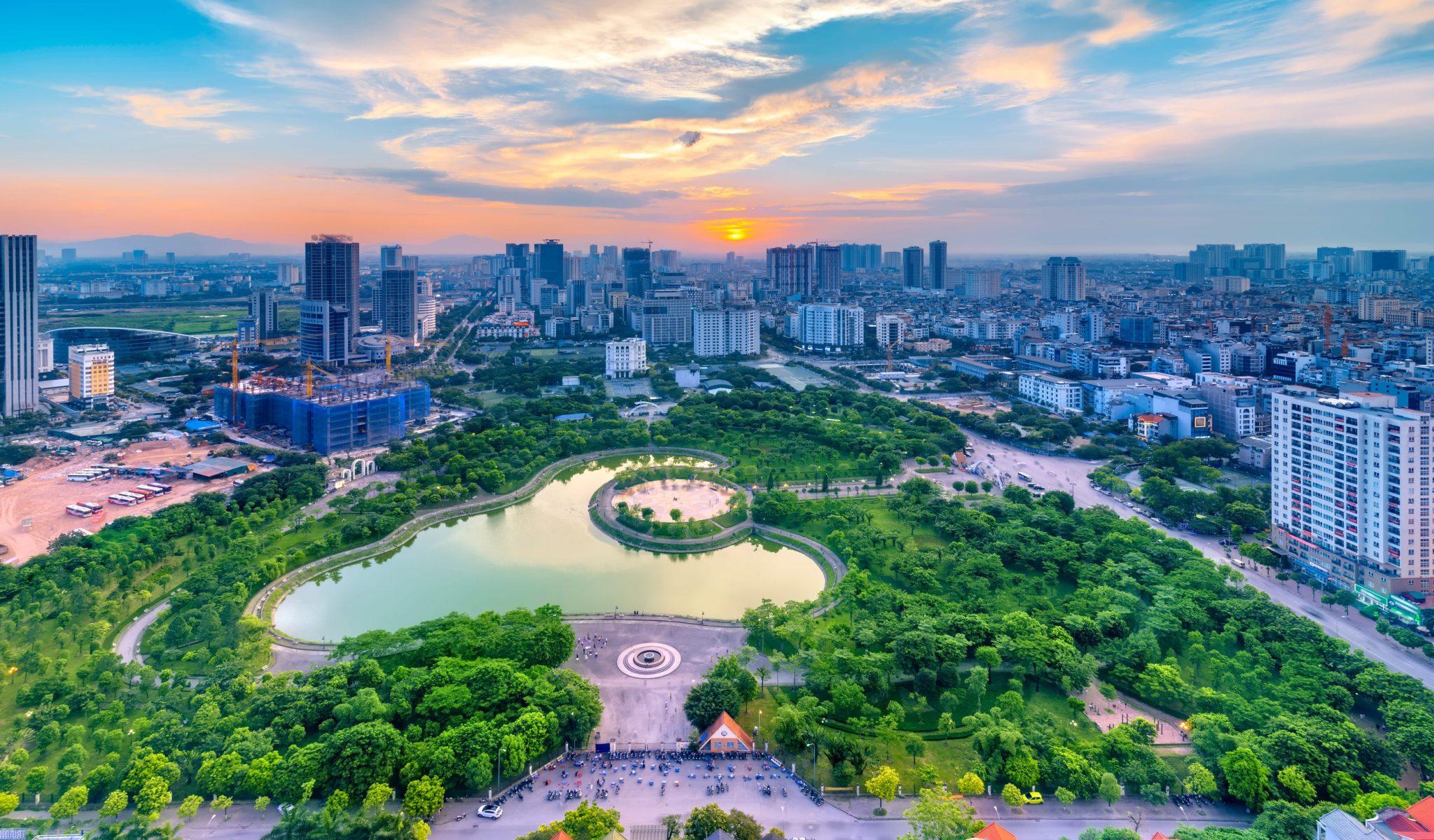
Hanoi is dismantling that dynamic. Across four major parks, including Cầu Giấy, Bách Thảo, Thống Nhất, and Indira Gandhi, the city has been removing the iron fences that long marked their edges. The gates are gone. The boundaries now blend into surrounding streets and sidewalks. You can enter from any direction, at any time, as part of a commute rather than a detour.
“Before, we had to walk far to get in through the main gate,” said Hoàng Thị Hiền, a resident of Thanh Xuân Ward. “Now I can enter the park from anywhere. It feels open and natural, like it’s part of my neighbourhood.”
The shift is aligned with Hanoi’s longer-range urban planning goals and reflects a rethink of what public space is supposed to do.
What open access actually changes
At Thống Nhất Park, one of the earliest sites in the program, more than two kilometres (about 1.2 miles) of fencing has been removed, connecting the park to the street grid around it. The effect on foot traffic was immediate.
“Now people can enter and exit from many directions, making access much more convenient and significantly increasing usage,” said Nguyễn Tiến Quang, vice chairman of Hai Bà Trưng Ward. “The park is no longer just a place to visit. It has become directly integrated into residents’ daily lives.”
That shift shows in who turns up and when. Early mornings and late afternoons now draw a broader cross-section of residents than the parks ever saw before, from elderly exercise groups to young families, with international visitors and students adding new layers of activity.
At Bách Thảo Park, the change has attracted a younger crowd. “We are seeing more young visitors coming to take photos, picnic and children playing in areas newly connected to sidewalks,” said Nguyễn Thị Lành, head of the park’s maintenance team, noting that the simultaneous removal of entrance fees made the change more accessible across income levels.
The psychology of a fence
Architect Phạm Anh Tuấn of Hà Nội University of Civil Engineering draws a distinction worth sitting with: physical access and felt access are not the same thing.
“Even before the fences were removed, access to parks was not particularly difficult,” he said. “However, in terms of spatial organization, removing the fences has created a much more open environment. More importantly, it brings a sense of closeness. Parks become a natural part of daily life.”
A fence, even an unlocked one, sends a message about separation. It marks the park as a space that operates on different terms, and entering it requires intention. Without that boundary, the park reads differently. At Indira Gandhi Park, that change in reading is reshaping perception of the surrounding area. “When the fences were removed, the park fully integrated with surrounding sidewalks and streets,” said Nguyễn Anh Dũng, vice chairman of Giảng Võ Ward. “The open views help reduce the sense of congestion from surrounding concrete blocks, creating a softer transition between urban spaces.”
Urban planners observe that green space is particularly effective at easing visual density in built environments. Without a fence framing it as a distinct object, a park becomes woven into the city’s fabric rather than set against it.
Openness brings new management demands
The transition is not frictionless. Higher foot traffic has introduced challenges around illegal parking and unauthorized vendors at some locations.
“In the past, management was concentrated at entry gates. With open parks, control must now extend across the entire space,” said Quang, whose ward responded by increasing patrols and reorganizing activity zones within the park.
Tuấn sees community ownership as the more durable answer over time. “Organizing cultural and artistic activities suited to each space will attract more people. When they participate, they not only use the space but also own it in a spiritual sense, which helps raise awareness of preservation,” he said.
The underlying logic is that people who feel ownership over a place tend to look after it. Whether that holds across Hanoi’s parks in the long run remains to be seen. What the early results show is that removing a barrier achieved something that urban planning often struggles to accomplish: it made people feel that a public space was genuinely theirs.
Did this solution stand out? Share it with a friend or support our mission by becoming an Emissary.