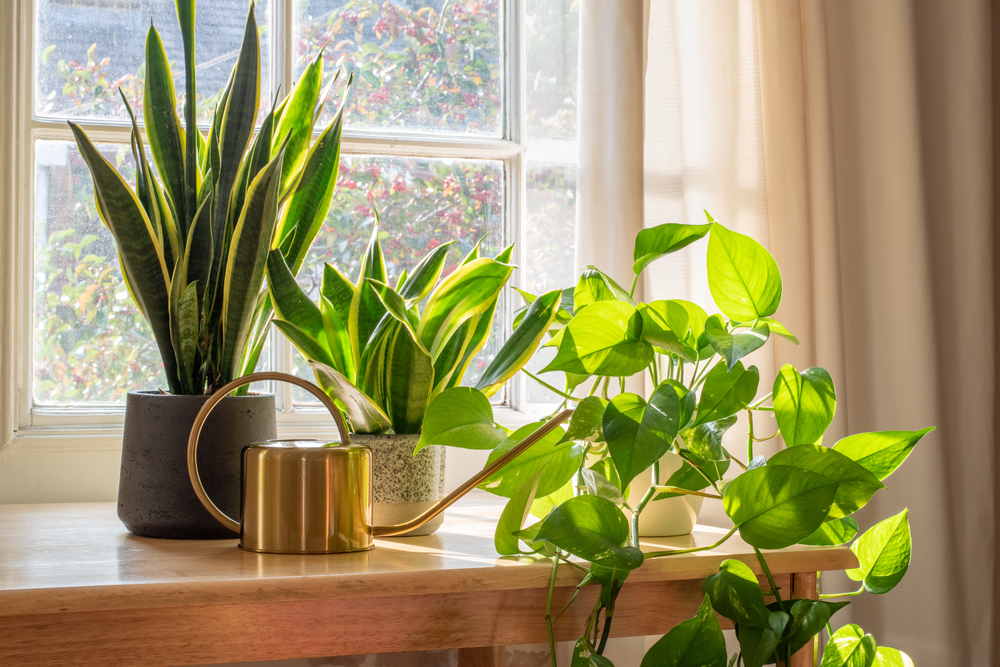
We all want to breathe in clean, crisp air no matter where we are, but this is especially true when we are within our own homes. Fortunately, Mother Nature provides us with beautiful and beneficial heroes: houseplants!
Plants’ astonishing pollution-fighting abilities
Move over, high-tech air-cleaning devices. While we are already aware that plants help cleanse the air we breathe, research from a team of academics from Australia’s University of Technology Sydney, along with the plant experts at leading plantscaping solutions company Ambius revealed more about the extent to which the plants effectively absorb toxins.
Ambius’ Johan Hodgson exclaims, “We know that indoor air quality is frequently significantly more polluted than outdoor air, which impacts mental and physical health, but the good news is that this study found that something as basic as having plants indoors can make a significant effect.”
Gasoline vapor is a huge nuisance when polluting our indoor environments. It contains the ‘big four’ volatile organic compound villains: benzene, toluene, ethylbenzene, and xylene, abbreviated BTEX. These nefarious substances are highly poisonous, carcinogenic, and well-known for causing respiratory problems and wreaking havoc on our neurological system. Surprisingly, gas stations can influence BTEX concentrations at schools hundreds of feet away.
Ambius and the researchers collaborated to build a Small Live Green Wall (SLGW) utilizing plant species known for their phytoremediation properties. What exactly is phytoremediation? It’s simply a fancy way of saying that plants are used to clean up contaminated soil, air, and water. The SLGWs were outfitted with devil’s ivy, arrowhead vine, and spider plant, while the control group held only potting mixture and no plant life.
The SLGWs were then sealed in perspex chambers and subjected to volatile organic chemicals before being tested using gas chromatography-mass spectrometry.
Their findings revealed high clearance rates for a variety of compounds. Alkanes had the most effective elimination, with a remarkable 97.9 percent reduction. Benzene derivatives, including the notorious BTEX chemicals, exhibited an astounding 85.96 percent drop, while cyclopentane saw an 88.18 percent reduction. These substances are known to have significant effects on our health, which makes the plants’ performance even more impressive.
“This is the first time plants have been tested for their ability to remove petrol-related compounds, and the results are astounding!” said lead researcher Fraser Torpy, a bioremediation expert. Plants not only remove the majority of pollutants from the air in a matter of hours, but they also eliminate the most dangerous petrol-related contaminants with outstanding efficiency.
Easy, affordable, and low-maintenance indoor air purification!
The discovery of plants’ extraordinary pollutant-fighting abilities throws up a new universe of possibilities. We may build settings that are not only affordable and aesthetically beautiful but beneficial to our health by utilizing their natural skills. So, let us embrace this plant-powered solution and benefit from its outstanding efficiency and effectiveness in cleansing our indoor air.
If you want to step up your house plant game this season, check out these helpful articles about choosing which plants to keep under your roof and caring for your leafy friends if you already have them.