
BY THE OPTIMIST DAILY EDITORIAL TEAM
There’s a particular kind of Sunday evening spiral that happens when you’ve spent twenty minutes reading about an ingredient you’ve never heard of, and you’re now convinced your entire routine is wrong. Skin care has never been better at making us feel behind. Five board-certified dermatologists, when asked which habits they most wish patients would break, kept arriving at the same place: most of us are doing too much, not too little. Some of what follows, you’ve heard before. Some of it will stick in a way the usual advice doesn’t.
Stop chasing skin care trends
“Skin care is a long game,” says Dr. Laurel Naversen Geraghty, a board-certified dermatologist in Medford, Oregon. “It’s not how much you blast your face with new ingredients; it’s the good, proven steps that you stick to over time.”
That runs counter to how skin care gets marketed, where the week’s buzzy ingredient has a way of making whatever you already own feel outdated. Dr. Ava Shamban, a board-certified dermatologist in Los Angeles, keeps seeing young patients come in with reactive, inflamed skin from doing too much at once. “I’ll ask, ‘Okay, three weeks ago, what were you doing?'” The answer is almost always a new stack of products.
The risk isn’t just wasted money. Layering too many active ingredients can compromise the skin barrier, leading to bumps, flakes, itchy rashes, and sensitivity that can “take time, a dermatologist consultation, and medication to calm and reverse,” Dr. Geraghty says. Her rule: don’t introduce more than one new product or ingredient at a time, and give anything at least three months before deciding it isn’t working. “Don’t give up on a proven ingredient after a few days or a week.” With retinoids, meaningful results take around six months. With peptides, two to three months. Trends come and go, but as Dr. Geraghty puts it, “your skin has to last you a lifetime.”
Build sunscreen into an existing habit
Sun exposure is the leading cause of skin aging and the leading cause of skin cancer. “UV light raises the risk for cancer, just like smoking and asbestos raise the risk of cancer,” says Dr. Geraghty. Every dermatologist in this article made some version of that point, with varying degrees of exasperation. Most people know they should wear sunscreen. Most people don’t do it every day.
Dr. Corey Hartman, a board-certified dermatologist in Birmingham, Alabama, has a fix: put sunscreen right next to your toothbrush. “It’s something you do every single day after brushing your teeth. That way you don’t have to wonder and guess if you put it on.” Build it into a routine you’re already doing, and it becomes automatic. Aim for SPF 35 or higher and hit the areas people routinely miss: the sides of the nose, the temples, the ears, and above the upper lip.
The one-squeeze rule for pimple popping
This might be the hardest habit on this list. Dr. Hartman is candid: “I’m guilty of it myself.” His answer isn’t to quit entirely. It’s a limit. “You get one good squeeze,” he says. If the pimple is ready, it comes out. If it doesn’t come out on the first try, stop. Continuing only pushes bacteria deeper, delays healing, and raises the chances of post-inflammatory hyperpigmentation, the dark spots that can stick around long after the pimple itself is gone.
After a successful squeeze, cover the spot with a hydrocolloid pimple patch. If nothing happened, use a salicylic acid spot treatment instead. Covering it either way makes the next step easier: it’s hard to keep picking at something that’s already covered.
One gentle cleanser is almost always enough
More cleanser doesn’t mean cleaner skin. “People get very exuberant with their cleansing technique,” says Dr. Hartman. Washcloths, silicone brushes, and mesh sponges are all too aggressive and prone to causing redness, irritation, and dryness. Double-cleansing, using two face washes in sequence, works well for people who wear heavy makeup or have very oily skin. Most people are neither. “I just think more people are double-cleansing than really need to be, and they end up over-cleansing,” Dr. Hartman says. One gentle, fragrance-free cleanser is usually all it takes.
Wash your face when you get home, not right before bed
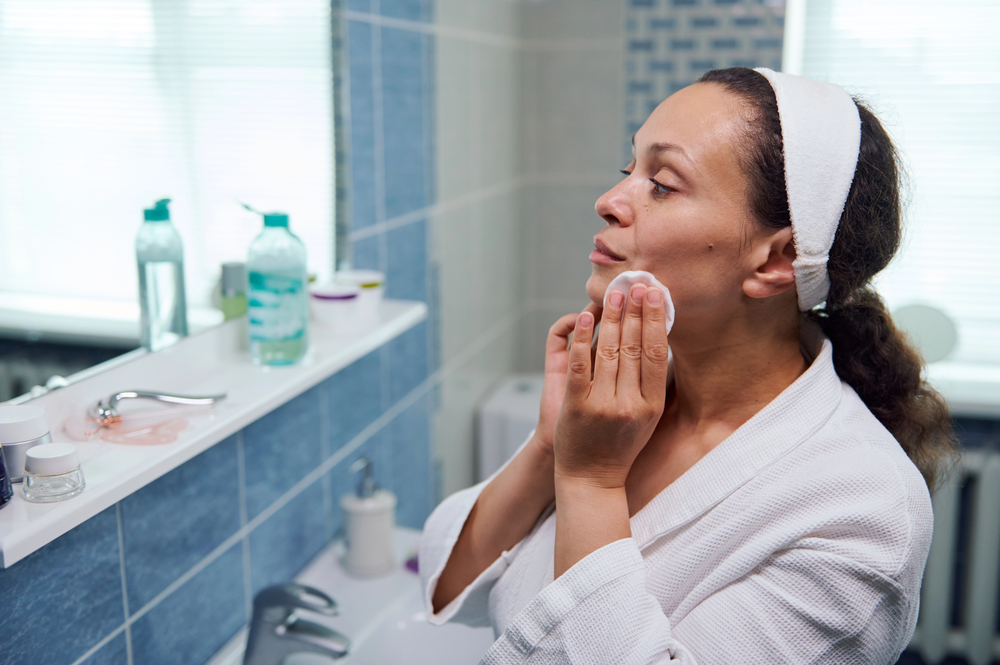
If nighttime face washing keeps getting skipped because you’re exhausted, Dr. Rachel Nazarian, a board-certified dermatologist in New York City, has a practical fix: stop treating it as a bedtime task. “Rather than waiting until bedtime, shift it earlier—when you get home, change your clothes, wash your face, remove your makeup.” Do it when you still have energy, and the habit holds.
Cleansing wipes aren’t a substitute. They feel like they’re doing something, but they leave behind residue that can irritate and dry out skin, and they don’t remove the dirt, bacteria, and makeup that built up during the day. You need soap and water.
Stop scratching your scalp
This is the one that tends to catch people off guard. Scratching an itchy scalp, even casually a couple of times a day, can cause hair breakage, according to a 2024 study in the Archives of Dermatological Research, and over time can contribute to thinning. Dr. Jeanine Downie, a board-certified dermatologist in Montclair, New Jersey, is blunt: “Then you’re adding the tension of scratching? Seriously?”
The timeline is shorter than you’d think. Regular scratching can cause breakage in less than a week, and recovery takes two to three months of keeping your hands off. If your scalp is itchy, address the itch rather than scratch it. An anti-inflammatory shampoo is a reasonable first move for common culprits like dandruff or mild psoriasis. For itch without an obvious cause, a dermatologist can figure out what’s driving it and treat it at the source.
Did this solution stand out? Share it with a friend or support our mission by becoming an Emissary.