


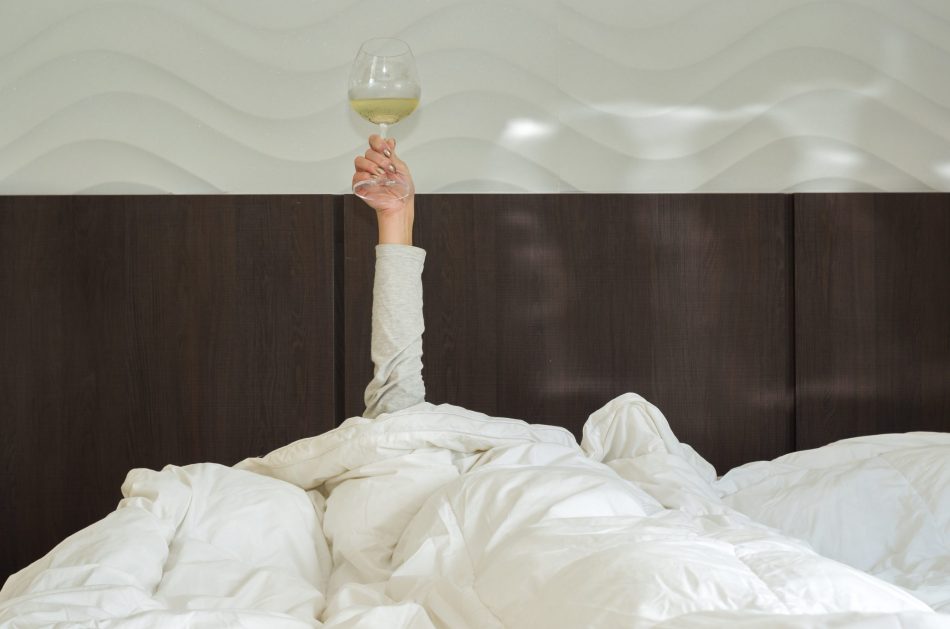
There’s nothing wrong with having a drink at the end of the day, maybe enjoying the occasional cocktail hour with friends. Evidence even shows that a little red wine with dinner can reduce your risk of type two diabetes. It’s when we drink too much that things get problematic. There’s the obvious hangover the day after, but what about right before that?
Have you ever wondered why a bit too much alcohol gives you a fitful night’s sleep? Turns out there’s a very good reason for that.
Alcohol can have a sedating effect, but it’s in the second half of the night that it turns on you. It disrupts what is called your “sleep architecture,” the deepening levels of sleep necessary for satisfying and regenerative rest. Alcohol disrupts these different levels in different ways.
For one, alcohol is a diuretic, increasing your urine output. So, with quite a lot in your system, you’ll probably find yourself getting out of bed a few times in the night to visit the bathroom, and then comes the challenge of getting back to sleep.
Once you fall back asleep, your body will soon start to metabolize the alcohol. Initially, alcohol can put you in a deep and dreamless sleep, but when the levels drop and you metabolize the alcohol it will actually have a very activating effect.
“As the levels decline, you’re going to get more issues with the fragmentation,” said Dr. R. Nisha Aurora, a member of the board of directors of the American Academy of Sleep Medicine. Your dreams might also get a bit more stressful and vivid causing you to wake up even more.
Alcohol also inhibits impulses between nerve cells. While this is something that helps you calm down and get to sleep, it also suppresses rapid eye movement, the REM sleep phase that is the most restful and dreamy. On top of that, it increases snoring by relaxing the airways and waking you and those next to you up, and it can even be risky for those with sleep apnea.
Using alcohol to fall asleep can be a bit of a slippery slope too, as it might necessitate gradually increasing the amount or even mixing it with other sleep aids, which is very bad.
Sleep researchers suggest taking a break from alcohol for at least two weeks to get one’s bearings on how it affects sleep and also just to recharge. Most find that when they stop drinking for a bit, they sleep much better.
It’s still fine to have the occasional glass with dinner or meet some friends at a bar, but it’s a good idea to make drinking time much earlier than bedtime, take a bit to sober up.






